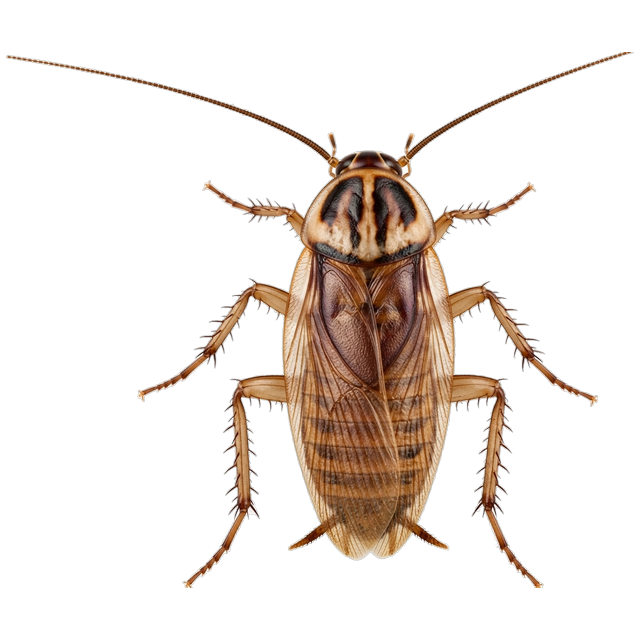
 German cockroach
Blattella germanica
German cockroach
A small, fast-breeding indoor cockroach, the most common cockroach found in Ontario homes and restaurants.
Specimen index
German cockroachBlattella germanica
A small, fast-breeding indoor cockroach, the most common cockroach found in Ontario homes and restaurants.
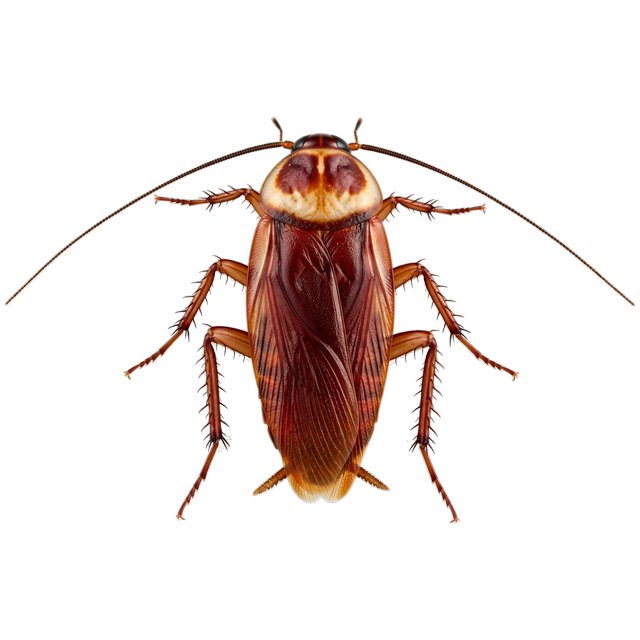 American cockroach
Periplaneta americana
The giant of indoor cockroaches, up to 5 cm long, living in sewers, basements and steam tunnels.
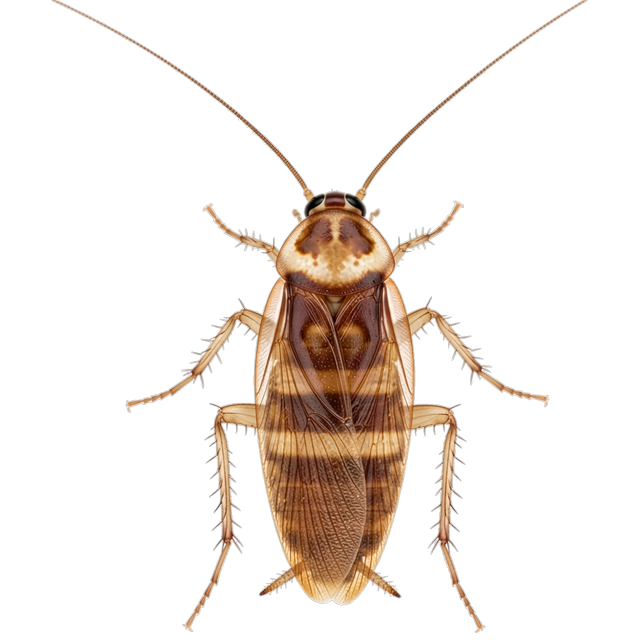 Brown-banded cockroach
Supella longipalpa
The cockroach that lives high, on ceilings, picture frames and upper walls, not just under the sink.
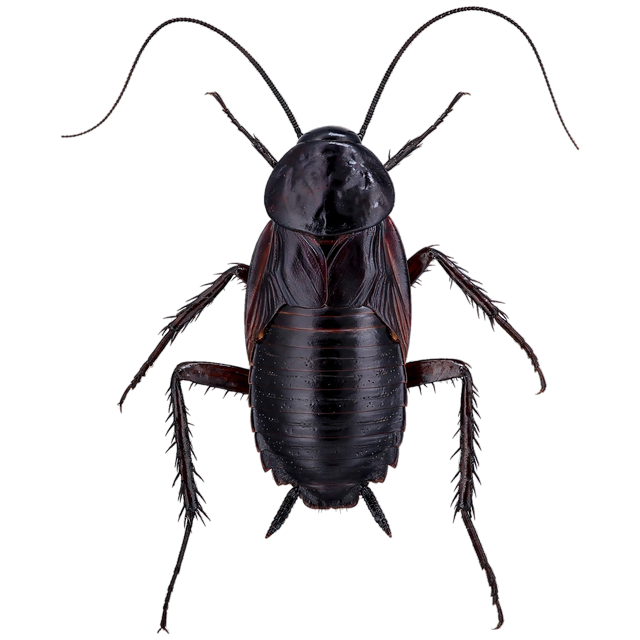 Oriental cockroach
Blatta orientalis
The cool-climate cockroach, dark, slow and damp-loving, at home in basements and sewers.
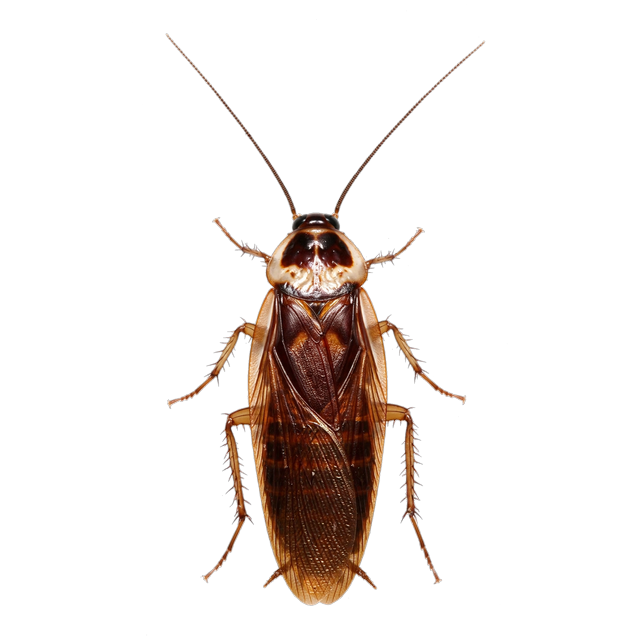 Pennsylvania wood cockroach
Parcoblatta pennsylvanica
A native outdoor cockroach that wanders inside by accident, especially males flying to lights at night.
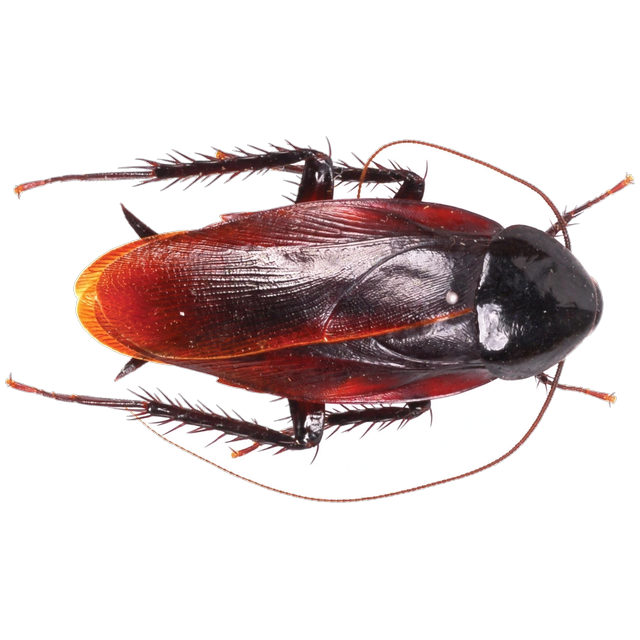 Smokybrown cockroach
Validiblatta fuliginosa (syn. Periplaneta fuliginosa)
A large, dark, strong-flying southern cockroach, included for identification, not an Ontario problem.
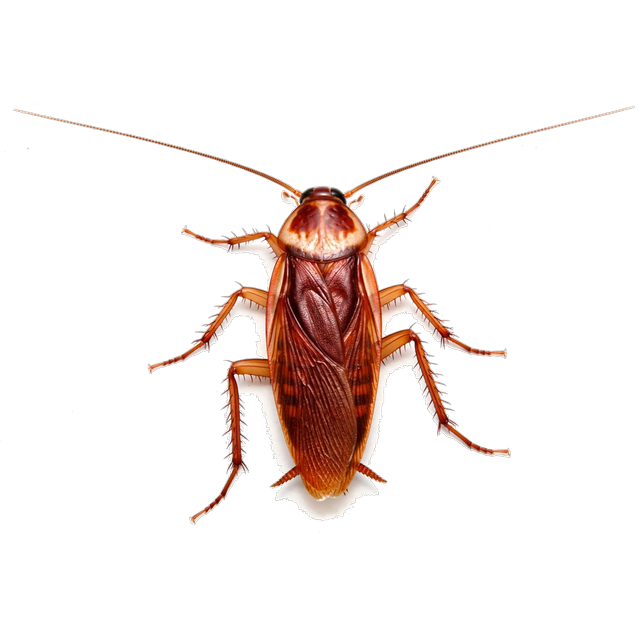 Turkestan cockroach
Shelfordella lateralis
A reddish-brown cockroach spreading through the southwestern US.
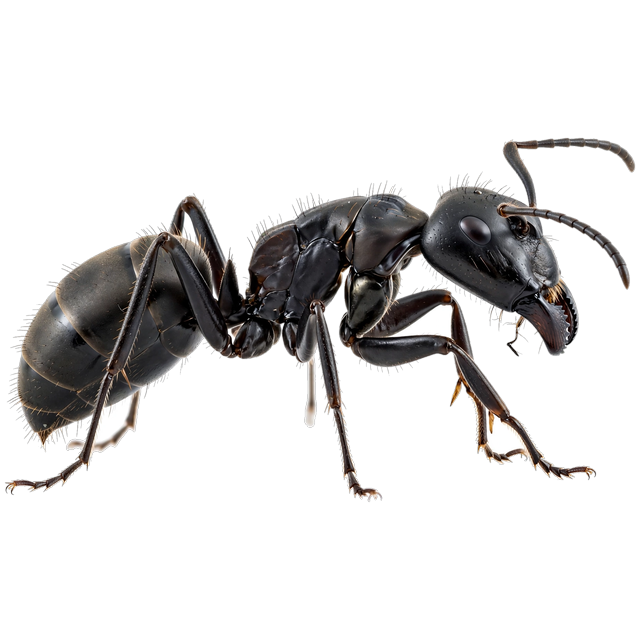 Carpenter ant
Camponotus pennsylvanicus
Ontario's biggest house ant, it doesn't eat wood, it excavates it, hollowing beams from the inside.
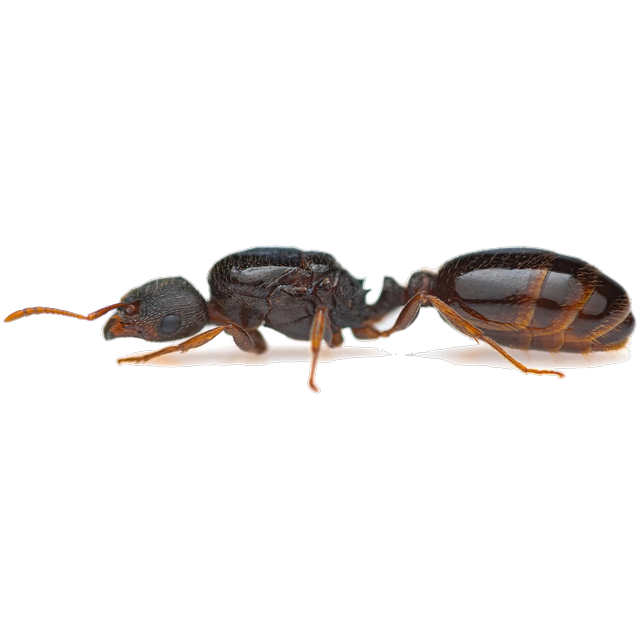 Pavement ant
Tetramorium immigrans
The sidewalk ant, tiny, dark, and famous for springtime turf wars between rival colonies.
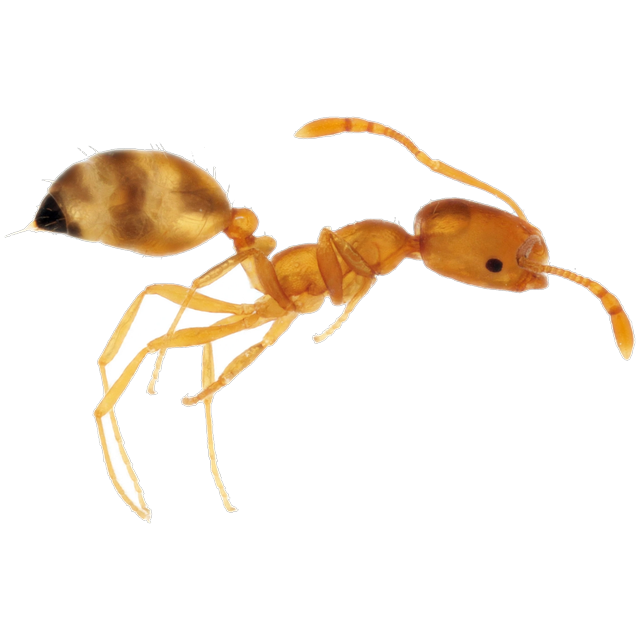 Pharaoh ant
Monomorium pharaonis
A 2 mm yellow ant that splits its colony when disturbed, the hospital and apartment-block specialist.
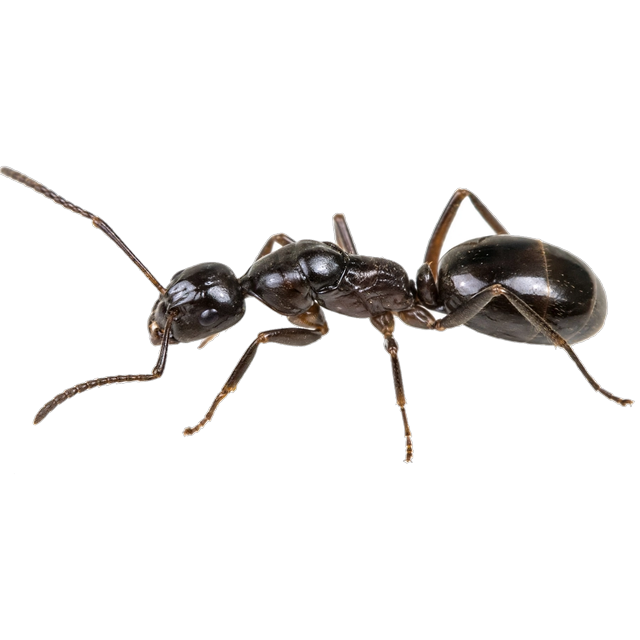 Odorous house ant
Tapinoma sessile
Crush one and it smells like rotten coconut, the native ant that moves indoors every spring.
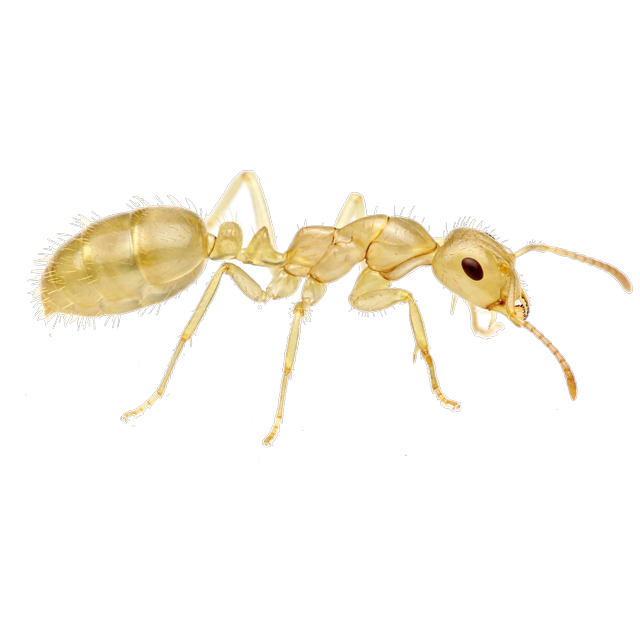 Thief ant
Solenopsis molesta
A 1.5 mm yellow burglar that nests beside other ant colonies and steals their food and young.
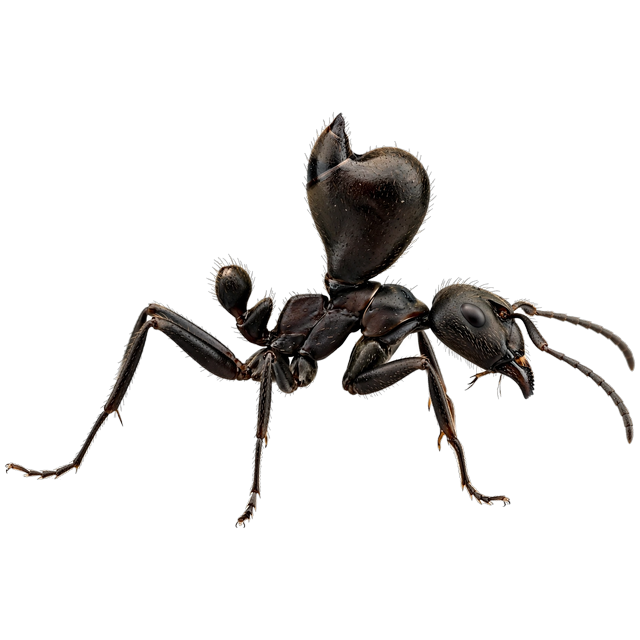 Acrobat ant
Crematogaster spp.
The ant that does a handstand, raising its heart-shaped abdomen overhead when alarmed.
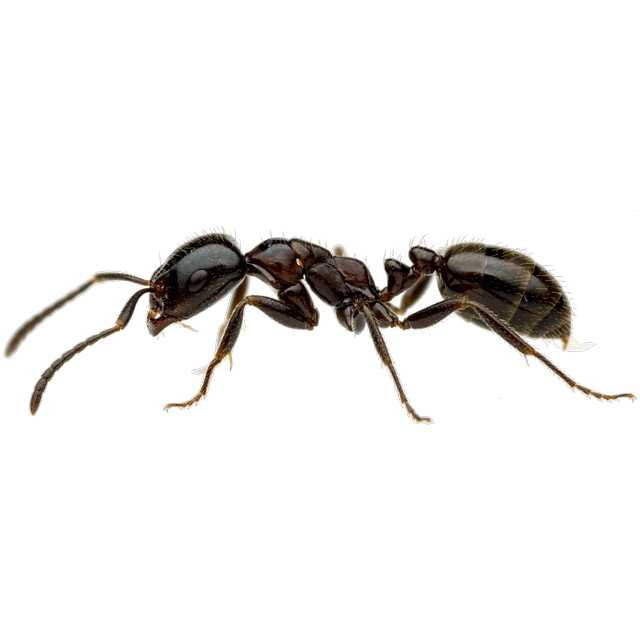 Little black ant
Monomorium minimum
A 1.5 mm jet-black ant that marches in tight trails from lawn nests straight into kitchens.
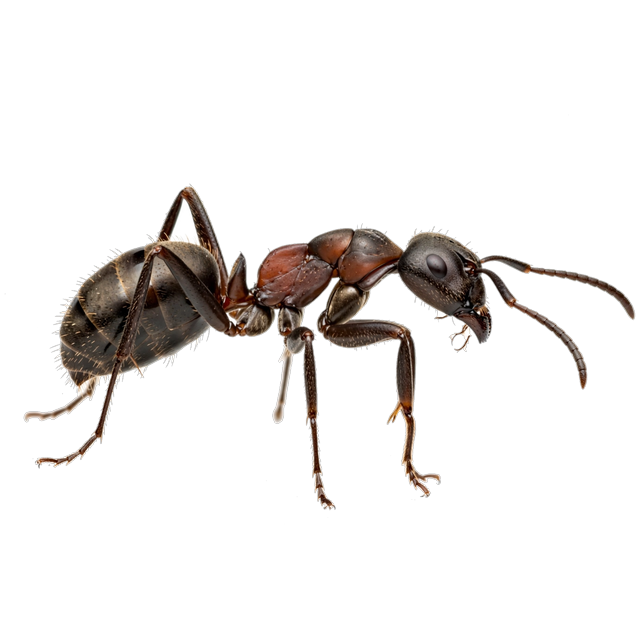 Field ant
Formica spp.
The mound-builders of lawns and fields, big, fast, and armed with formic acid spray.
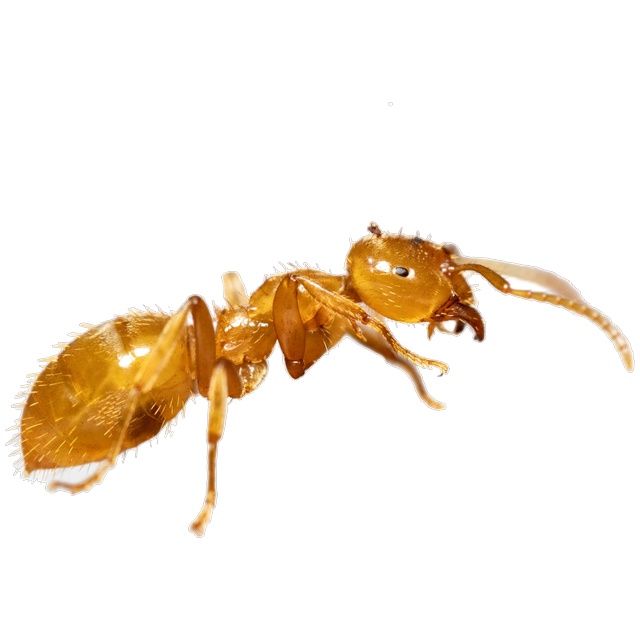 Moisture ant
Lasius spp.
The yellow ant that smells like lemons, and only nests where wood is wet and rotting.
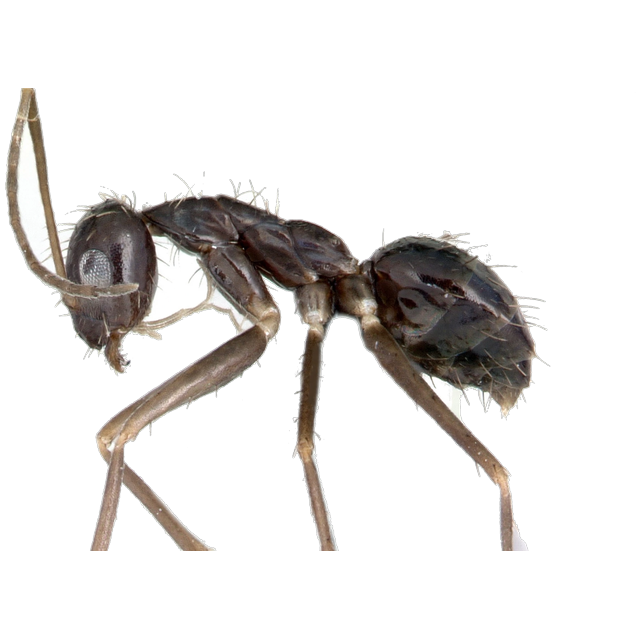 Crazy ant
Paratrechina longicornis
The ant that runs like it is panicking, long-legged, erratic, and unmistakable in motion.
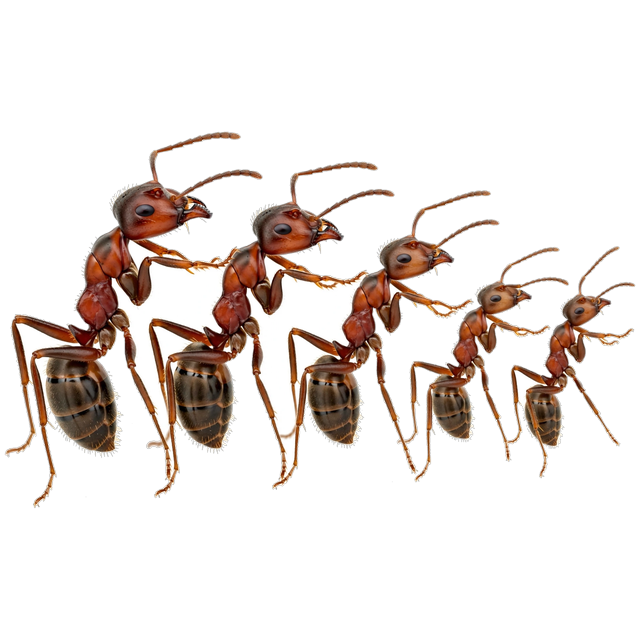 Red imported fire ant
Solenopsis invicta
The infamous stinging ant of the American South, not in Canada, included as the reference standard.
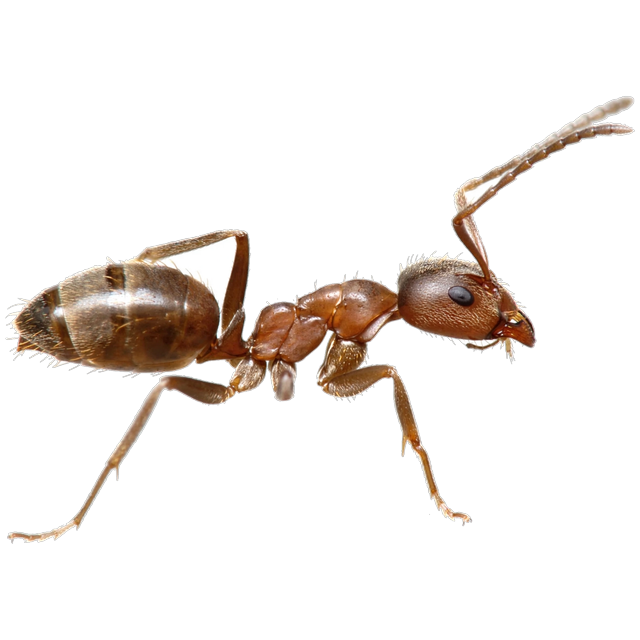 Argentine ant
Linepithema humile
A small brown ant that forms massive supercolonies, dominant in California homes.
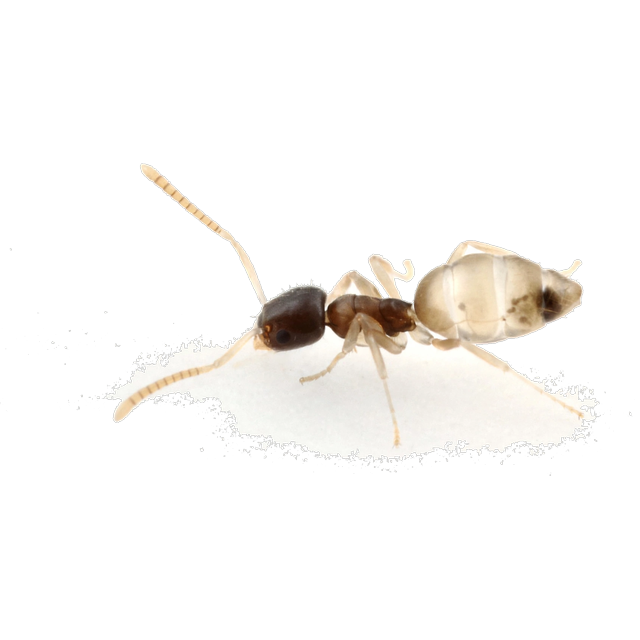 Ghost ant
Tapinoma melanocephalum
A tiny ant with a dark head and ghostly pale body, common in Florida homes.
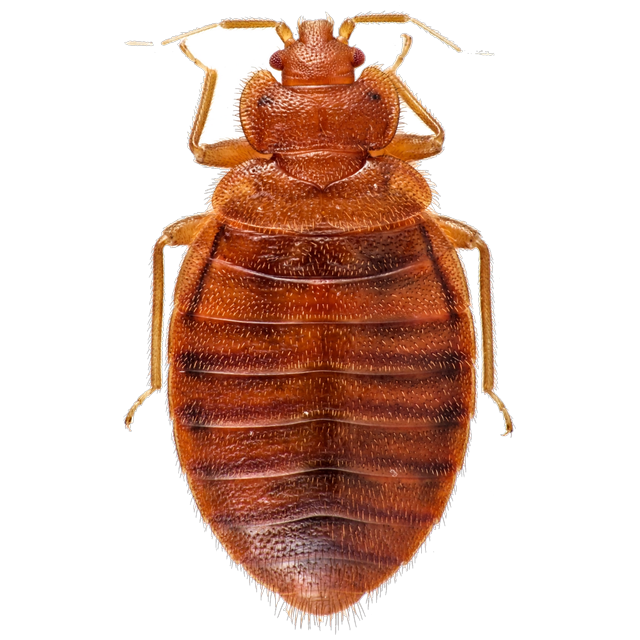 Bed bug
Cimex lectularius
The apple-seed-sized night feeder, hiding in mattress seams by day, feeding on sleeping people by night.
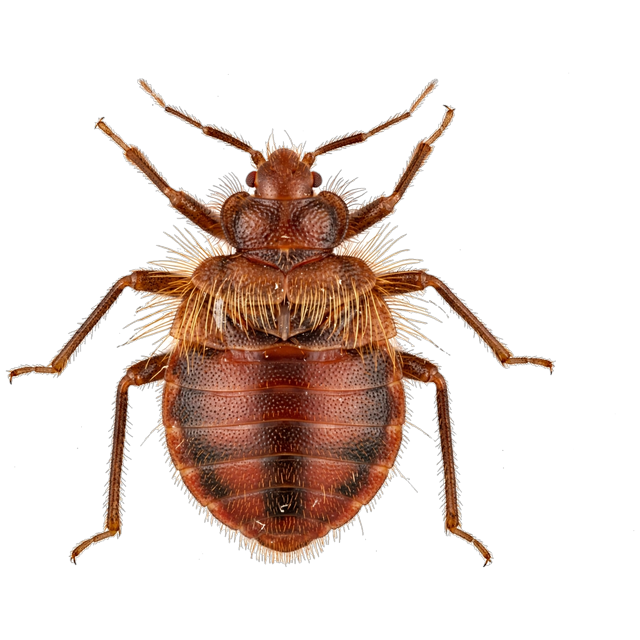 Bat bug
Cimex pilosellus
The bed bug's twin that feeds on bats, it only bothers people when the bats leave.
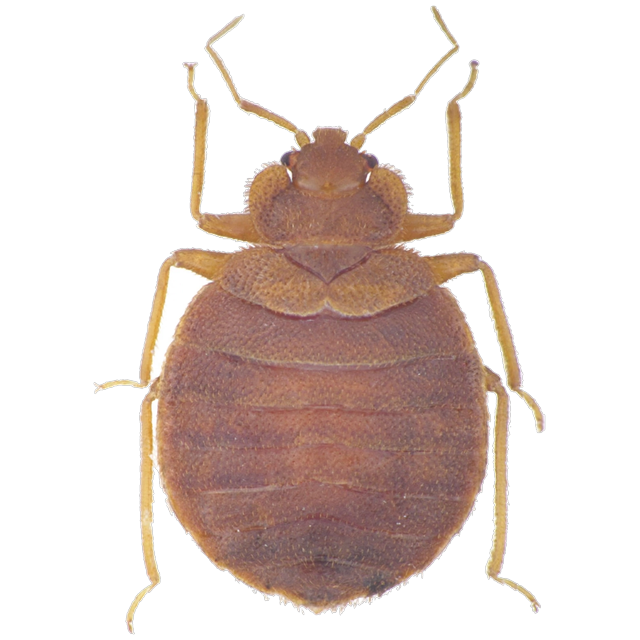 Swallow bug
Oeciacus vicarius
The bird-nest cousin of the bed bug, it moves indoors when the swallows fly south.
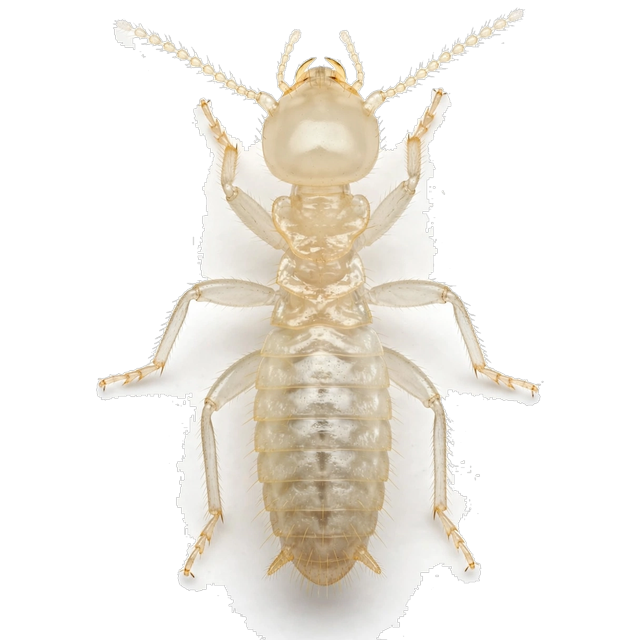
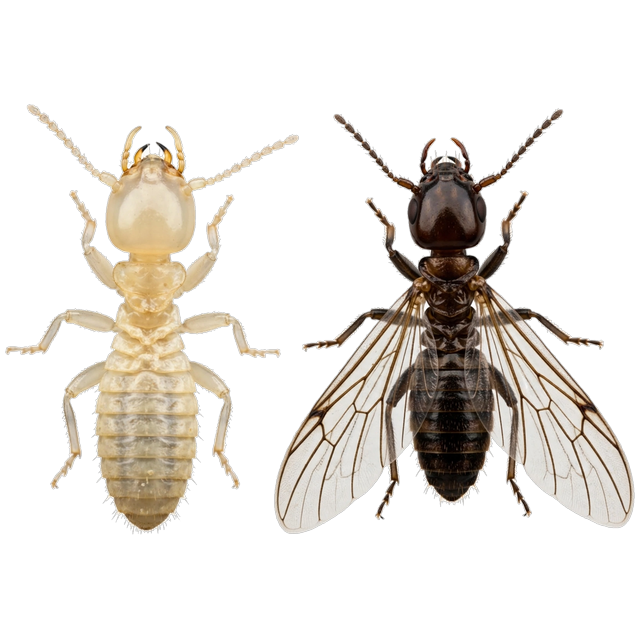 Eastern subterranean termite
Reticulitermes flavipes
A pale, blind, wood-eating insect that lives in huge underground colonies and quietly hollows out the wood in your home.
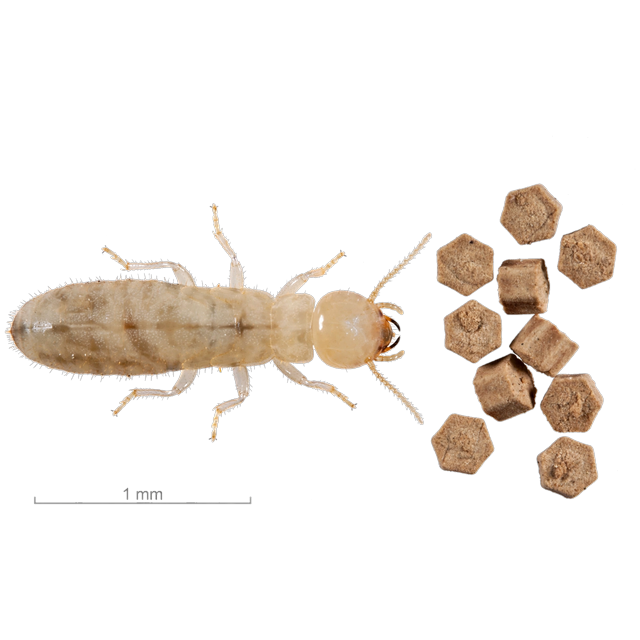
 Western subterranean termite
Reticulitermes hesperus
The West Coast's version of the subterranean termite, same underground habits, different coastline.
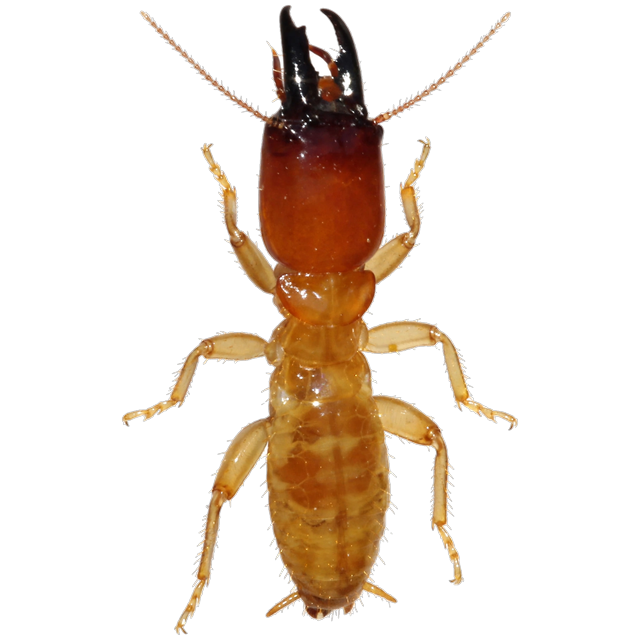
 Drywood termite
Incisitermes spp.
A termite that needs no soil at all, the whole colony lives inside a single piece of dry wood.
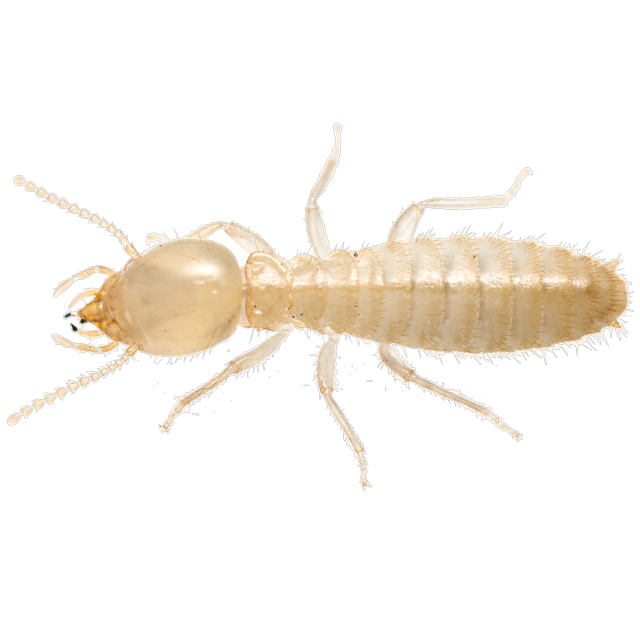
 Dampwood termite
Zootermopsis spp.
The giant of the termite world, a colony that only moves into wood that is already rotting wet.
 Formosan subterranean termite
Coptotermes formosanus
An aggressive subterranean termite of the southeastern US, not established in Canada.
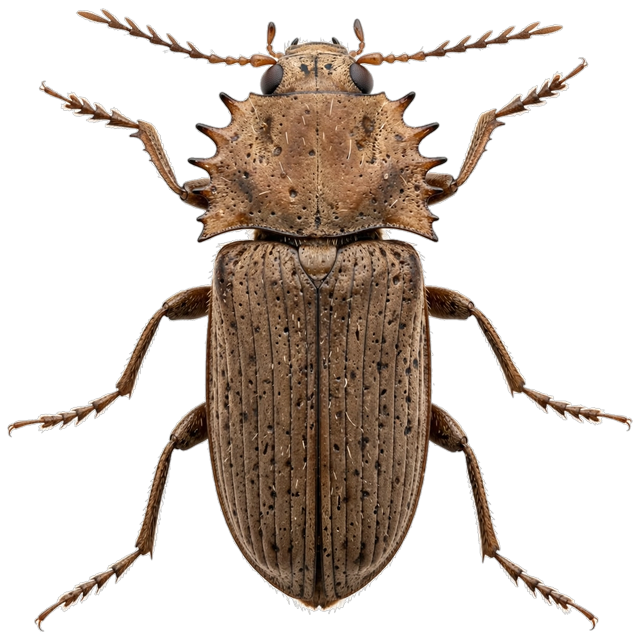 Sawtoothed grain beetle
Oryzaephilus surinamensis
A tiny flat beetle that slips into packaged food and cannot fly, if it's crawling on your cereal box, it's probably this one.
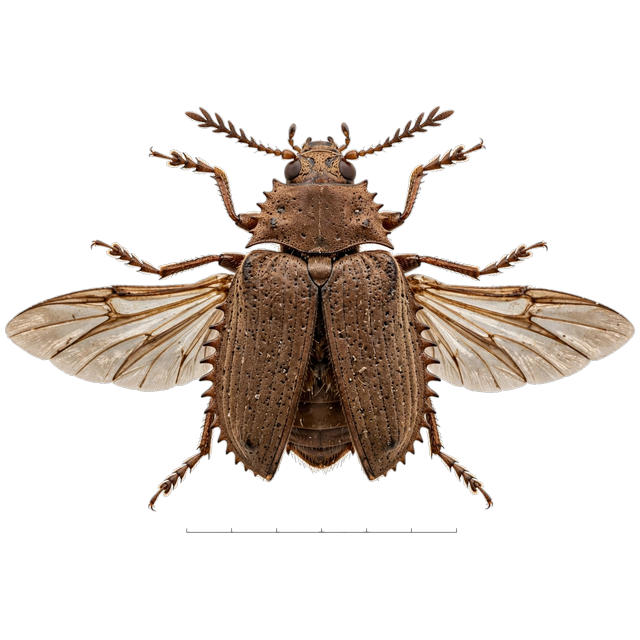 Merchant grain beetle
Oryzaephilus mercator
The sawtoothed grain beetle's flying twin, slightly pickier about food, and it can cross the room on its own wings.
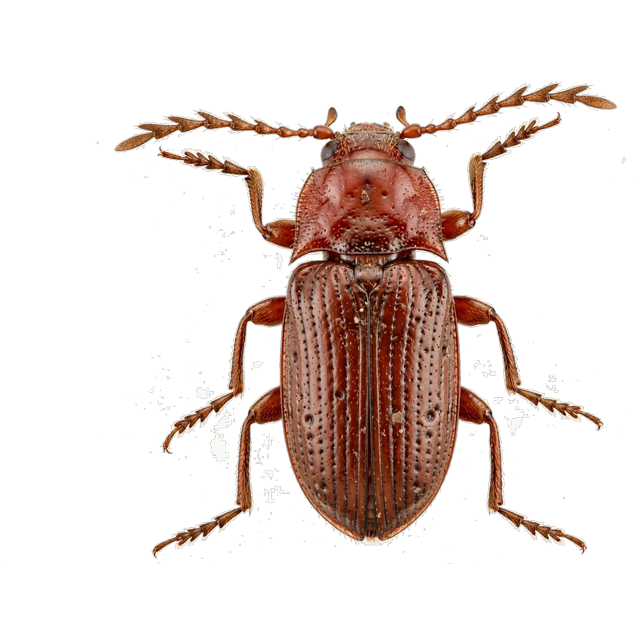 Red flour beetle
Tribolium castaneum
The lab rat of the beetle world, a flour pest so well studied that scientists sequenced its entire genome.
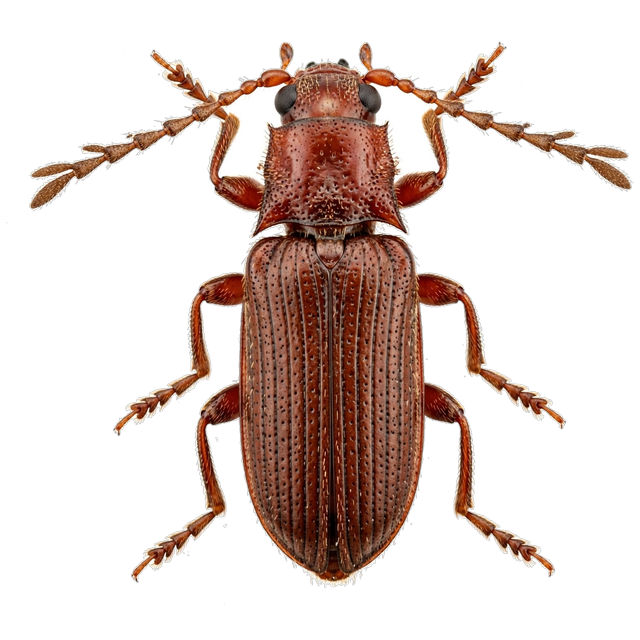 Confused flour beetle
Tribolium confusum
Nearly identical to the red flour beetle, but it can't fly and prefers cooler pantries, the exam loves this pair.
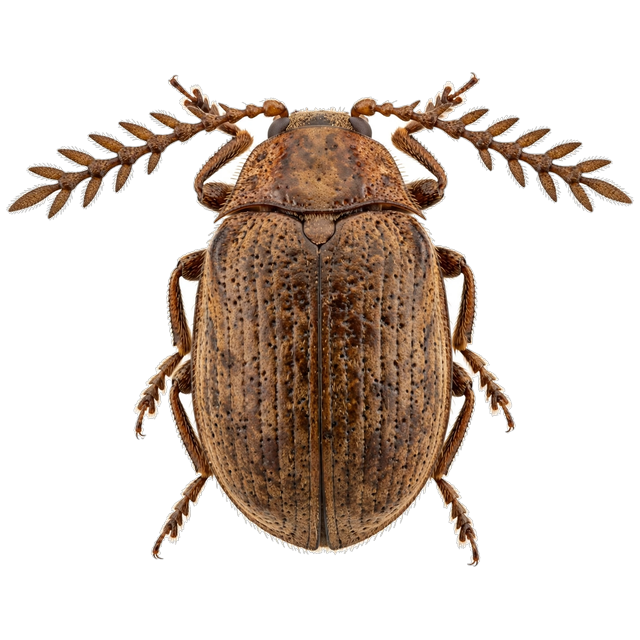 Cigarette beetle
Lasioderma serricorne
A tiny humpbacked beetle that eats almost anything dry, tobacco, spices, dog food, even books.
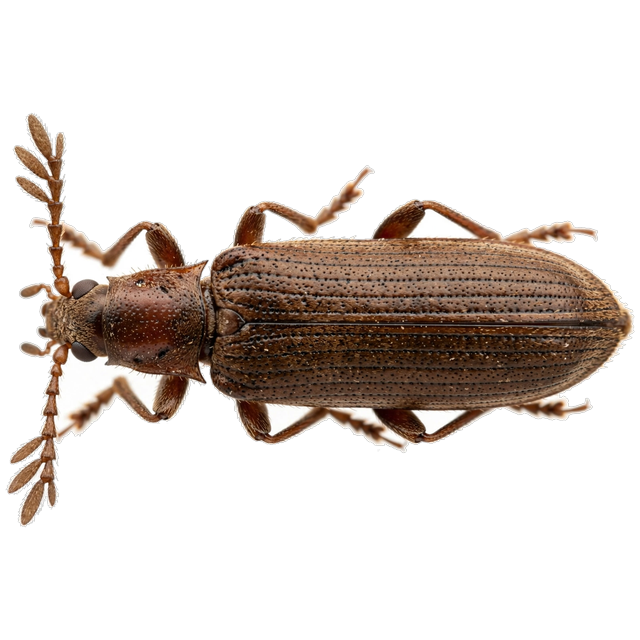 Drugstore beetle
Stegobium paniceum
Named for old pharmacies it once raided, this beetle eats dried herbs, bread, books, and almost anything else.
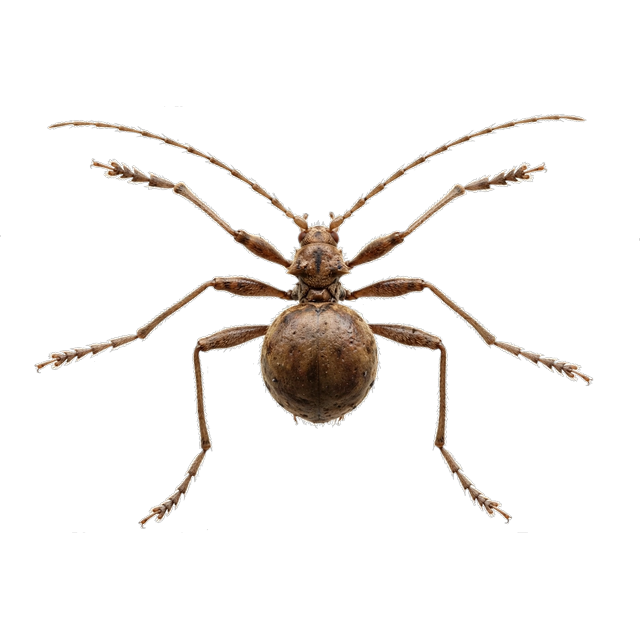 American spider beetle
Mezium americanum
A beetle that looks like a tiny spider, it can't fly, lives for over a year, and eats almost any spilled crumb.
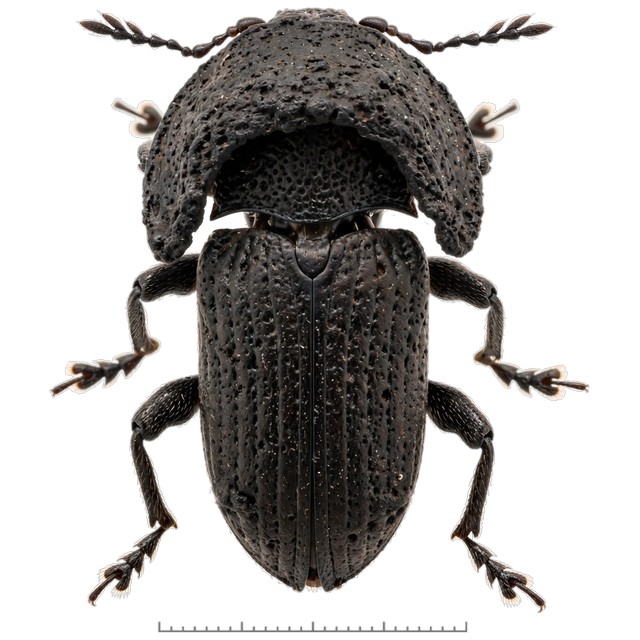 Lesser grain borer
Rhyzopertha dominica
A tiny cylindrical borer that drills straight into whole wheat kernels, and carries some of the strongest pesticide resistance in the insect world.
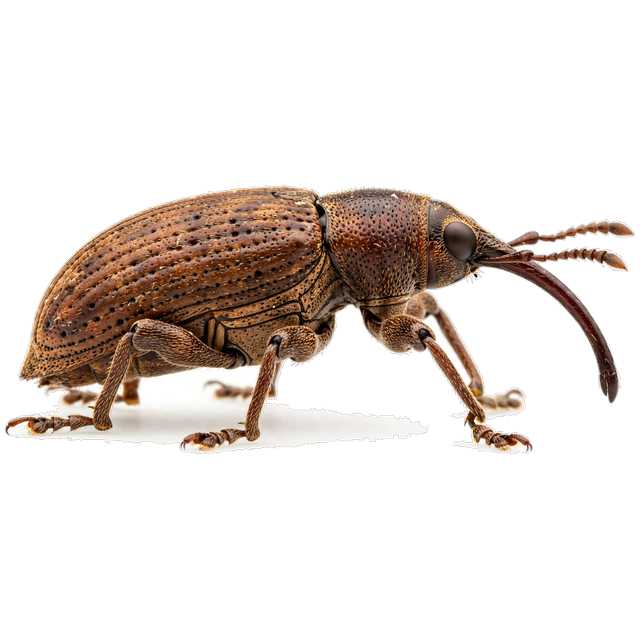 Granary weevil
Sitophilus granarius
A flightless weevil with a long snout that lays its eggs inside wheat kernels, the larva grows up hidden in the grain.
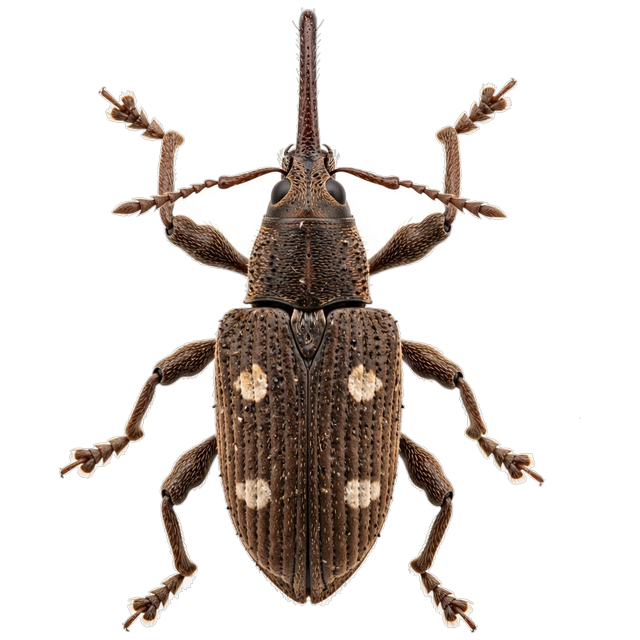 Rice weevil
Sitophilus oryzae
The granary weevil's smaller, flying cousin, with four pale spots on its back and a taste for warmer grain.
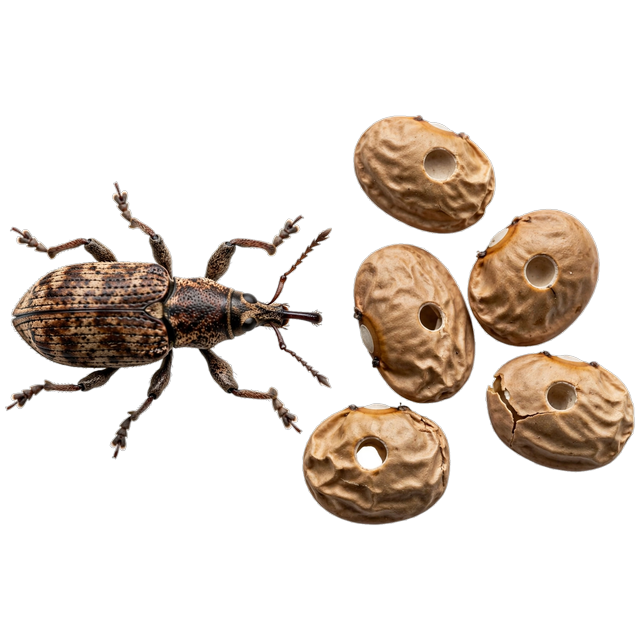 Bean weevil
Acanthoscelides obtectus
A beetle that starts eating your beans while they're still growing in the field, and finishes the job in the storage jar.
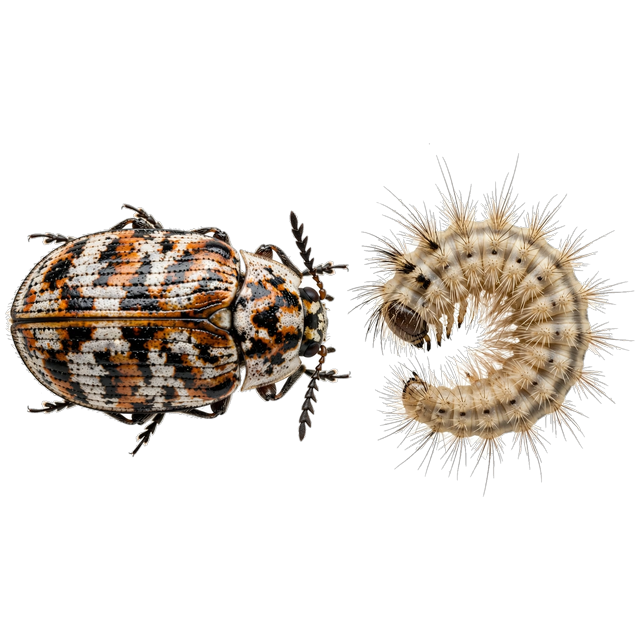 Varied carpet beetle
Anthrenus verbasci
Its fuzzy larvae eat wool sweaters and the adults visit flowers, the most common fabric pest in Ontario homes.
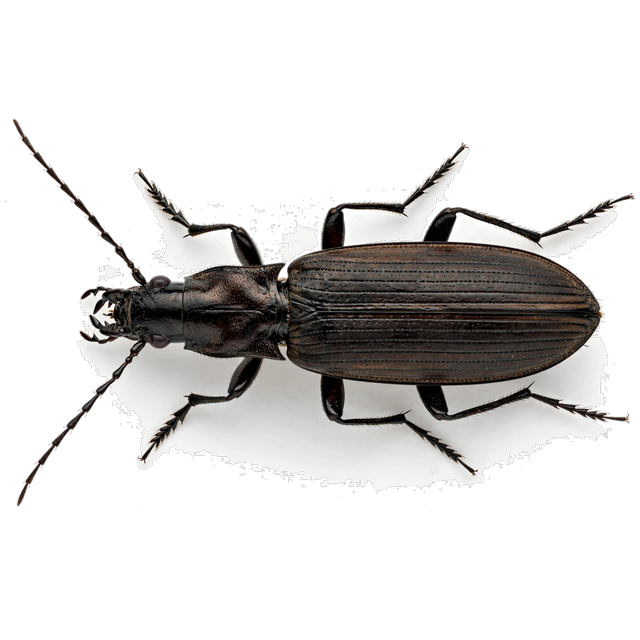 Black carpet beetle
Attagenus unicolor
Bigger, darker, and hungrier than its mottled cousins, the larvae can feed for nearly two years on a single wool rug.
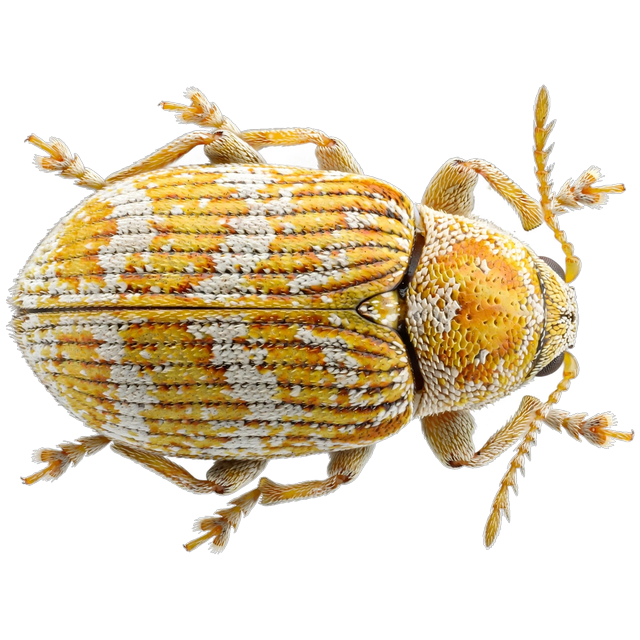 Furniture carpet beetle
Anthrenus flavipes
The varied carpet beetle's yellower cousin, same wool-eating larvae, more orange in the wardrobe.
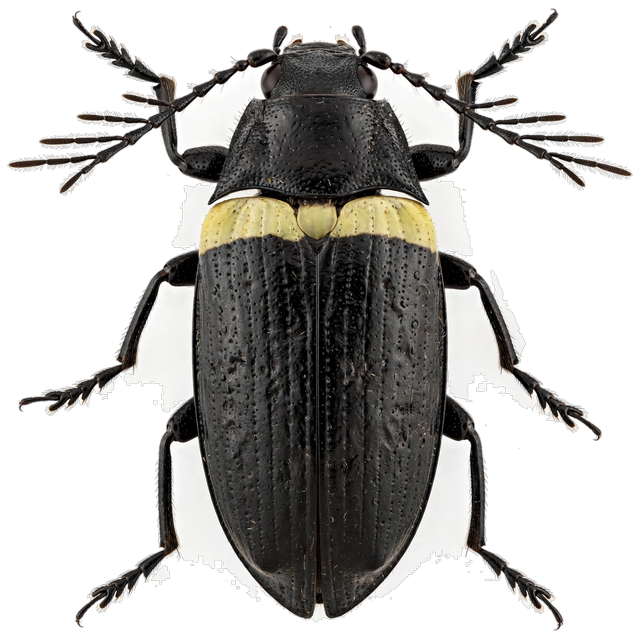 Larder beetle
Dermestes lardarius
A 7, 9 mm beetle with a pale yellow band across its back that raids pet food, cured meats, and the dead flies in your attic.
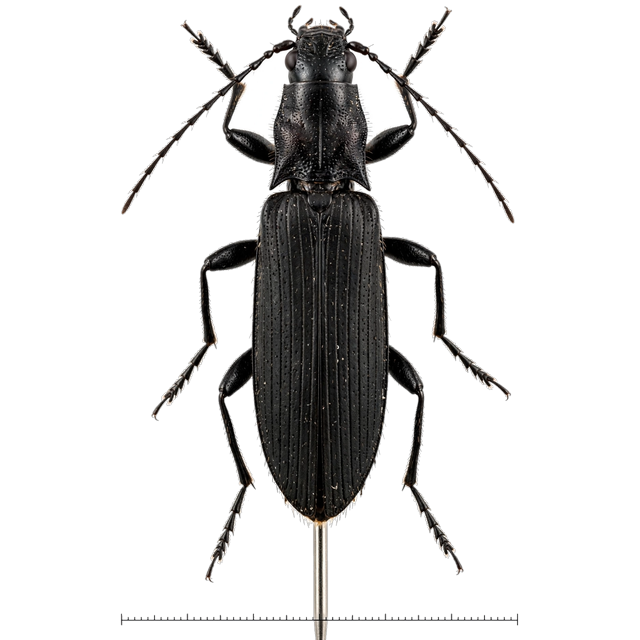 Hide beetle
Dermestes maculatus
The forensic scientist's beetle, it arrives at carrion on a predictable schedule, and museums fear its appetite for specimens.
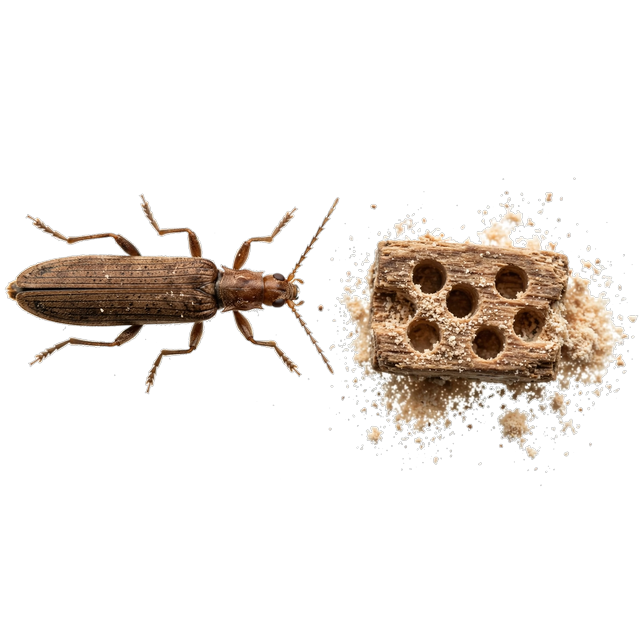 Powderpost beetle
Lyctus spp.
A beetle whose larvae turn hardwood sapwood into fine flour, leaving tiny shot-holes and piles of powder as their signature.
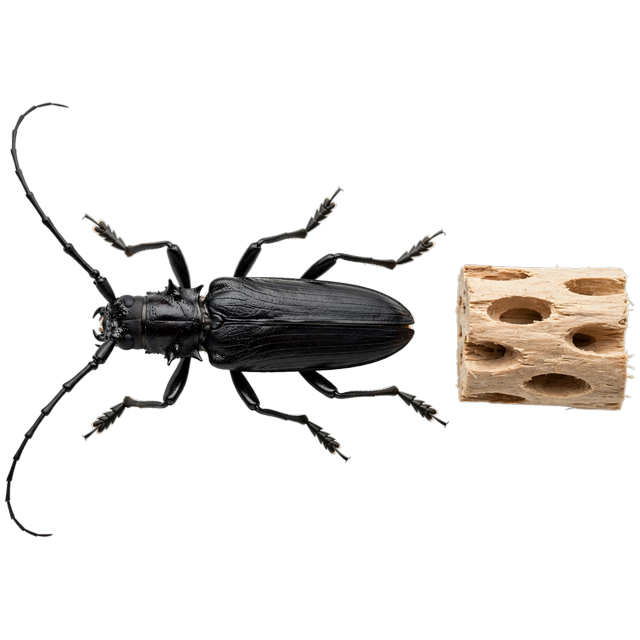 Old house borer
Hylotrupes bajulus
A longhorn beetle whose larvae can chew inside your roof beams for a decade, then emerge leaving oval holes the size of a fingertip.
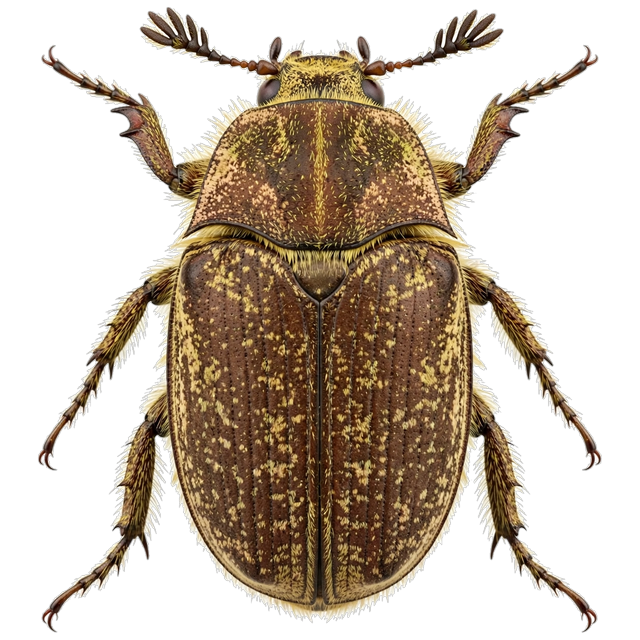 Deathwatch beetle
Xestobium rufovillosum
The beetle that taps inside old church beams, its mating knock was once thought to foretell death.
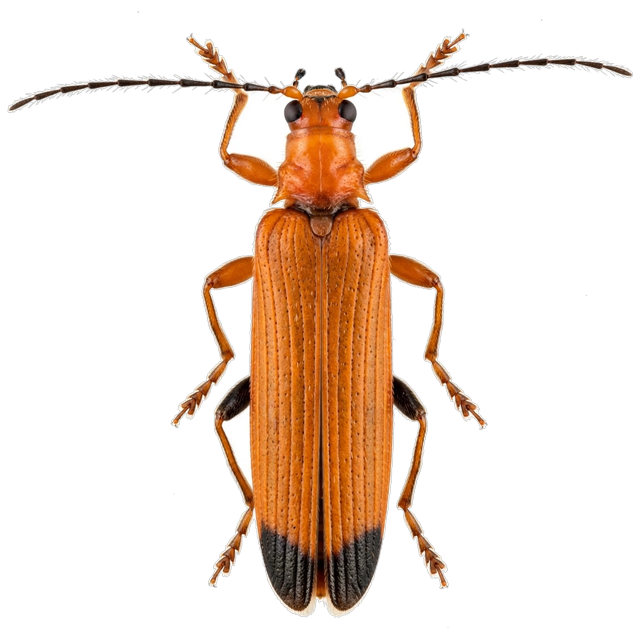 Wharf borer
Nacerdes melanura
An orange-and-black beetle whose larvae honeycomb the wet pilings of old wharves, and whose relatives can blister skin.
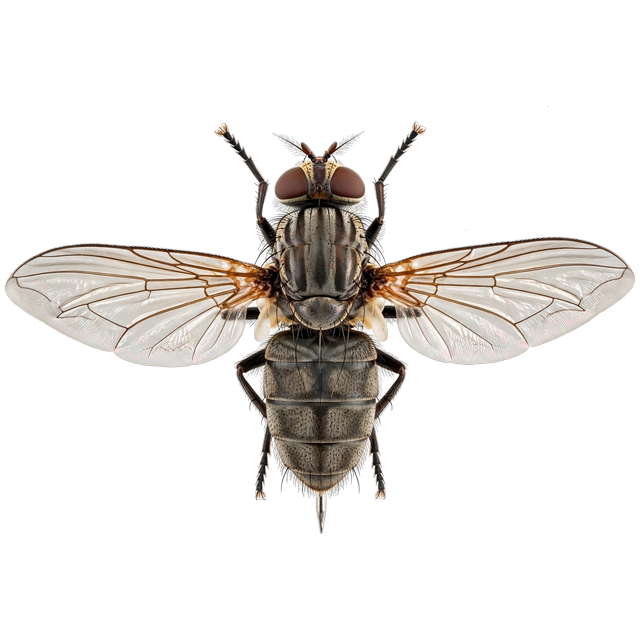 House fly
Musca domestica
The familiar grey fly that breeds in garbage and can carry germs from waste to your food.
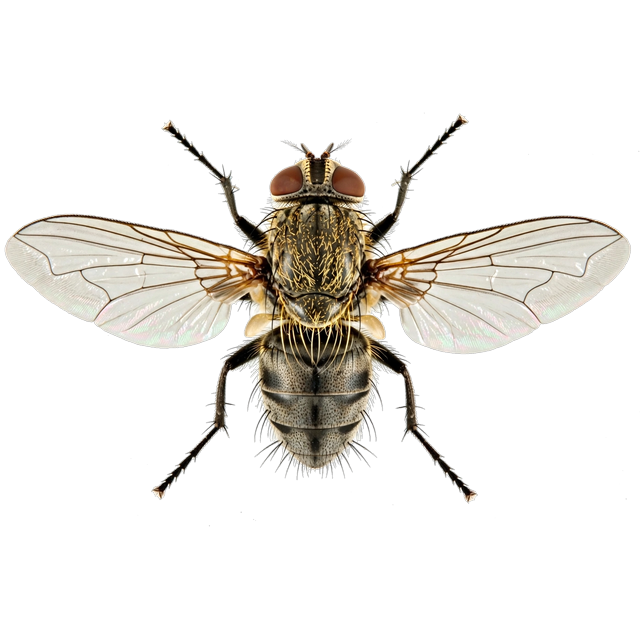 Cluster fly
Pollenia rudis
Big, slow, golden-haired flies that crowd into attics each autumn, they don't breed in your house.
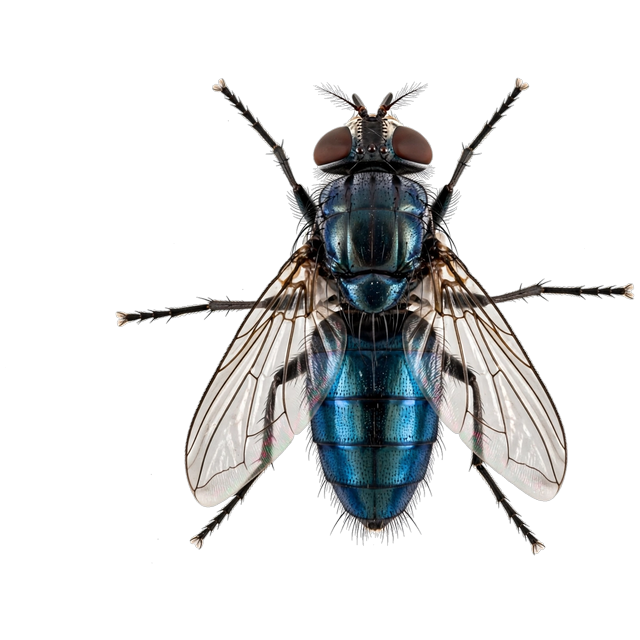 Blue bottle fly
Calliphora spp.
Big metallic-blue flies that arrive within minutes wherever meat or a dead animal is decaying.
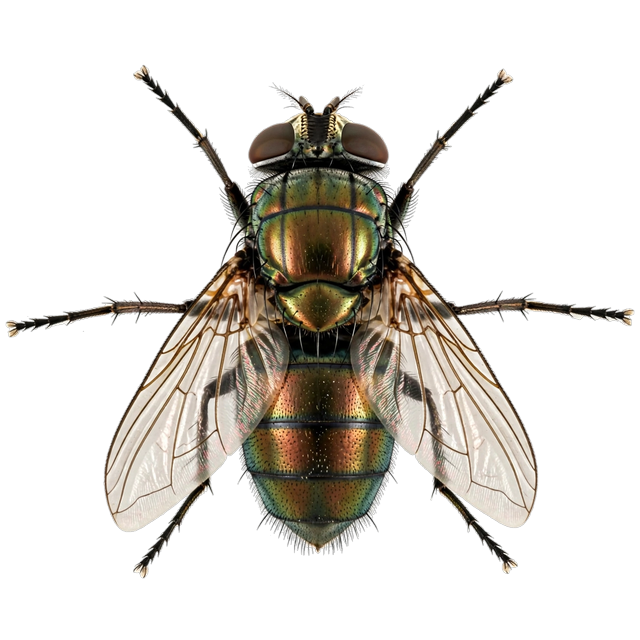 Green bottle fly
Lucilia spp.
Metallic-green carrion flies, one species' sterile maggots are used in hospitals to clean wounds.
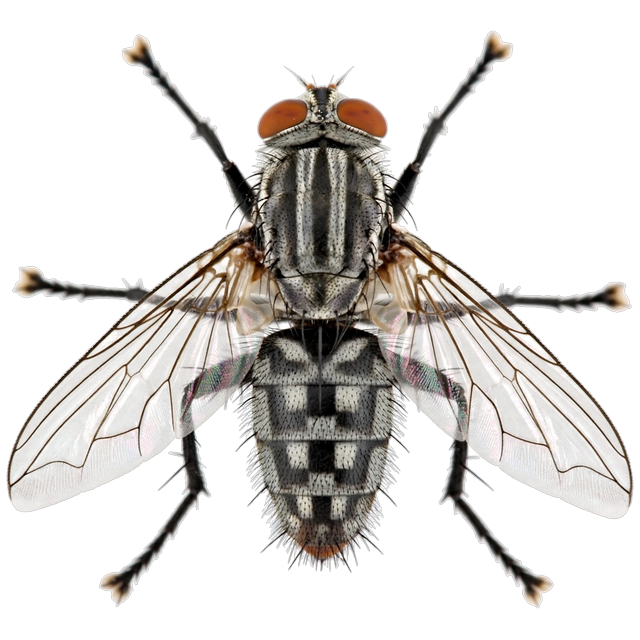 Flesh fly
Sarcophaga spp.
Grey flies with a checkerboard abdomen that give birth to live maggots instead of laying eggs.
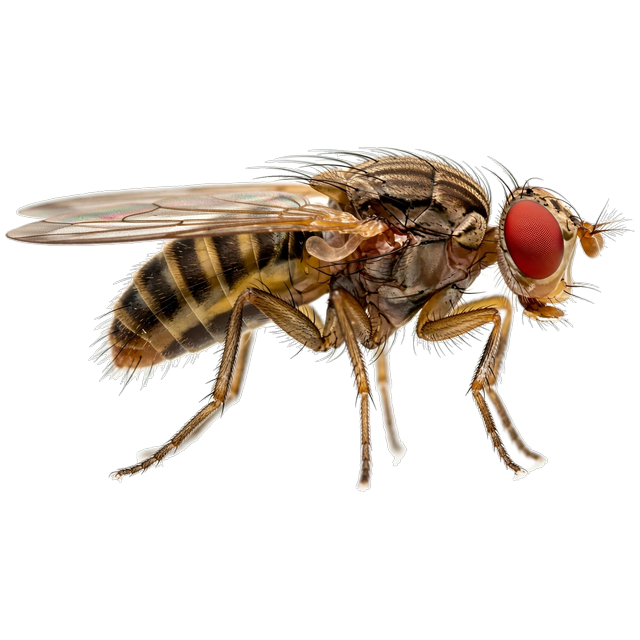 Fruit fly
Drosophila melanogaster
Tiny red-eyed flies over ripening fruit, and the most studied animal in the history of genetics.
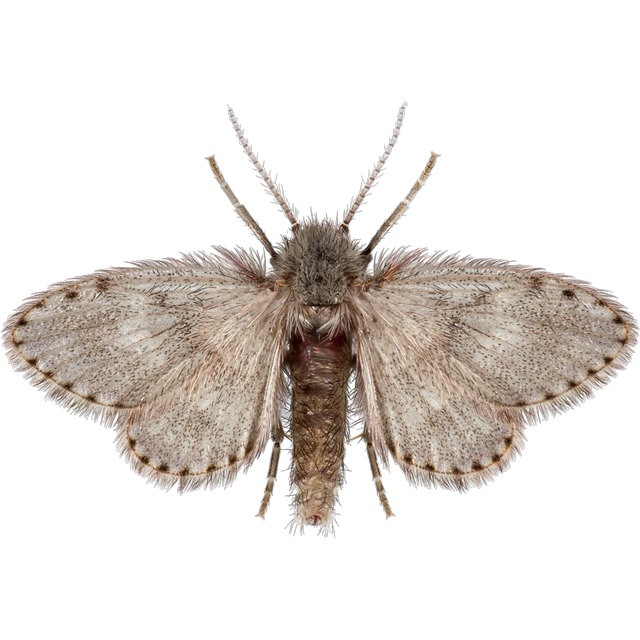 Drain fly
Psychoda spp.
Tiny fuzzy moth-like flies that breed in the slime inside your drains.
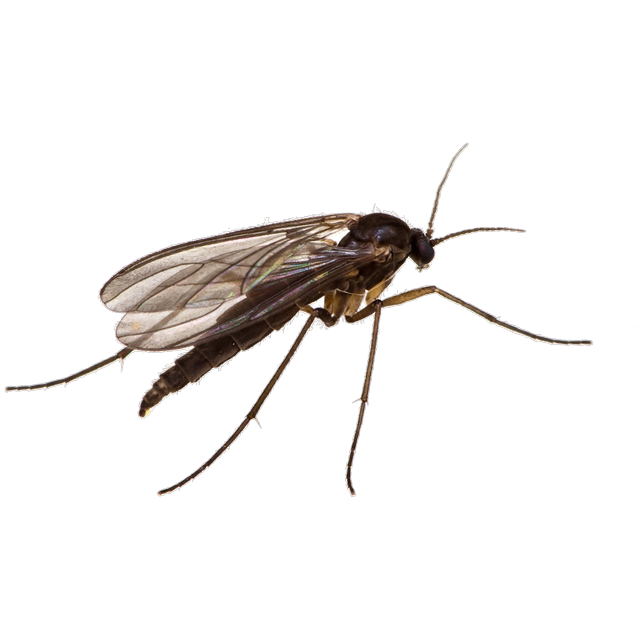 Fungus gnat
Bradysia spp.
Tiny dark flies hovering over houseplant soil, their larvae feed on fungi in damp potting mix.
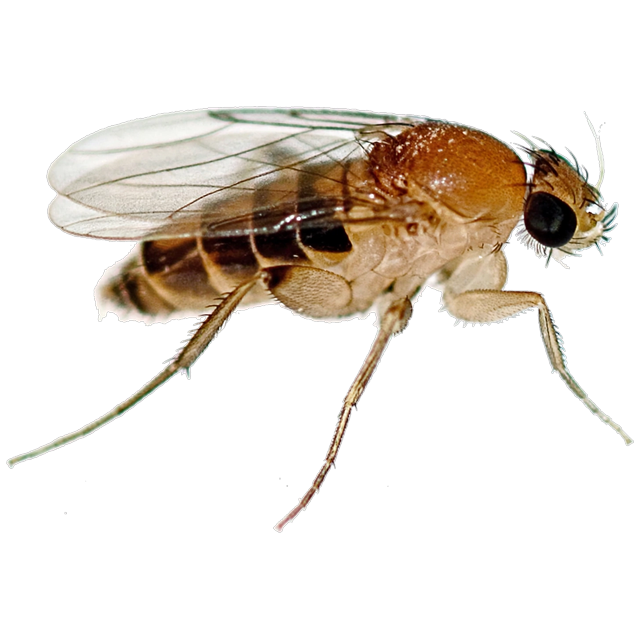 Phorid fly
Megaselia scalaris
Tiny humpbacked flies that run instead of flying, and can breed in almost anything moist and decaying.
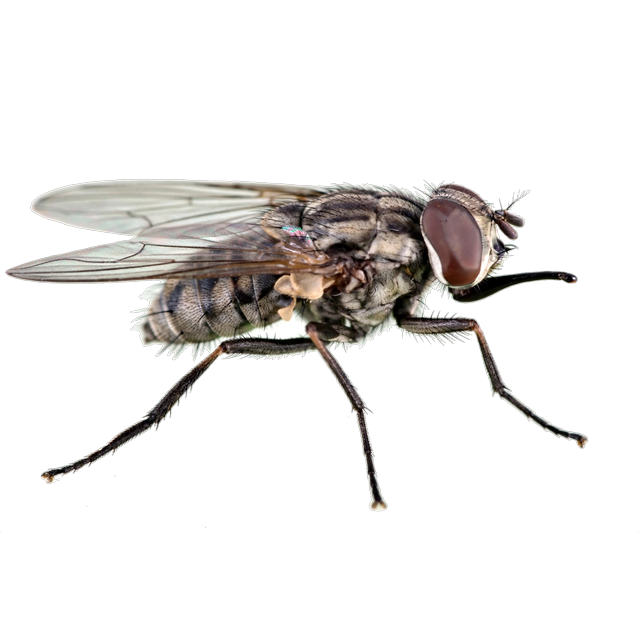 Stable fly
Stomoxys calcitrans
Looks exactly like a house fly, but this one bites, hard, usually around your ankles.
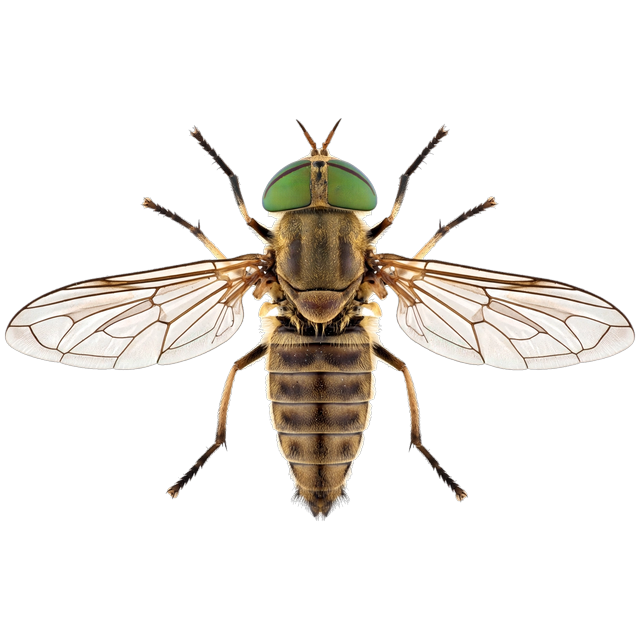 Horse fly
Tabanus spp.
Big, fast, painful biters the size of a thumbnail, the females need blood to make eggs.
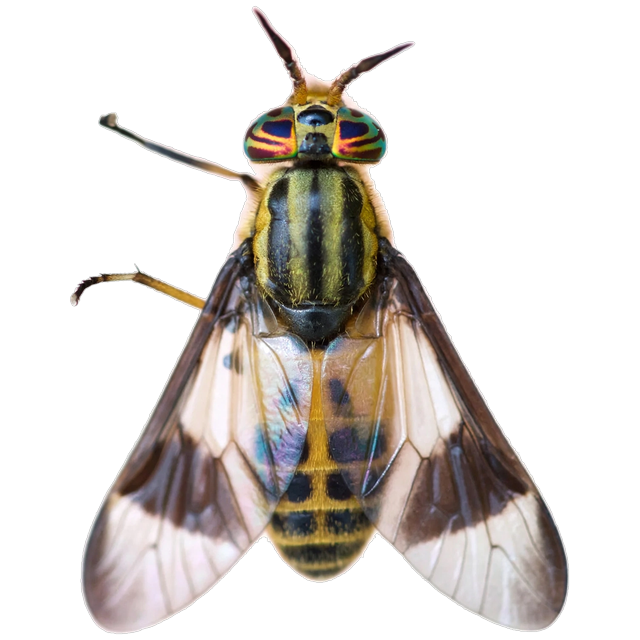 Deer fly
Chrysops spp.
Smaller cousins of horse flies with patterned wings, the classic early-summer woodland biter.
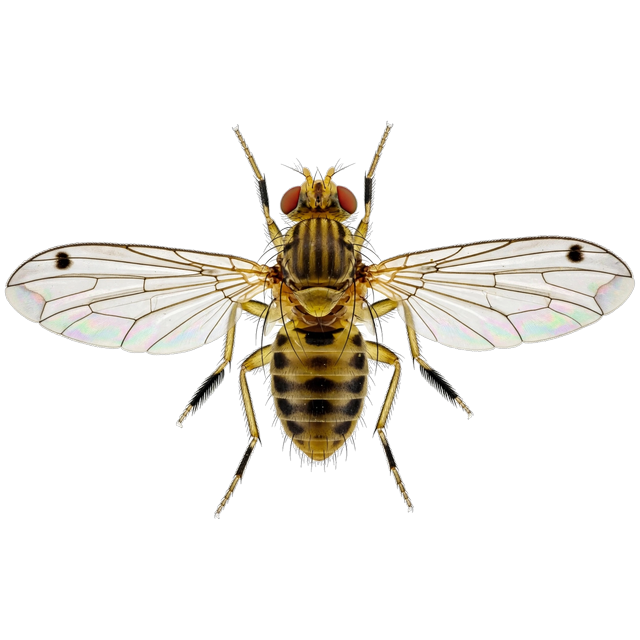 Spotted-wing drosophila
Drosophila suzukii
An invasive fruit fly whose females slice into healthy, ripening berries and cherries to lay eggs.
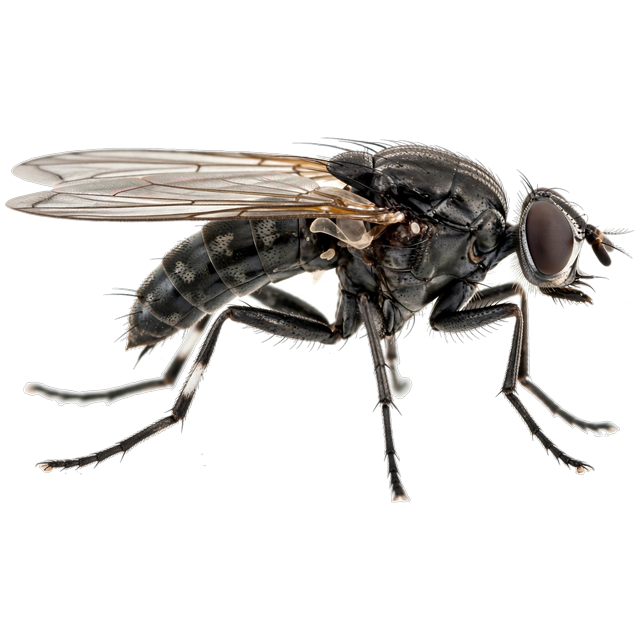 Black fly
Simulium venustum
A tiny humpbacked biting fly, the scourge of Ontario cottage country in spring.
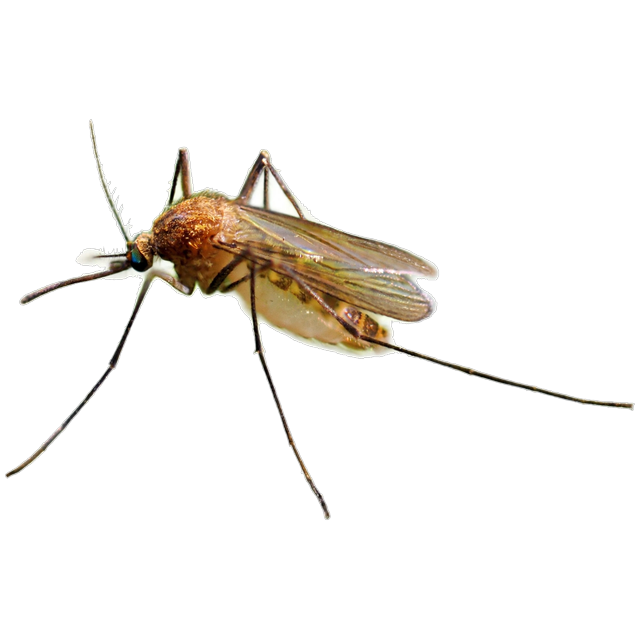 Northern house mosquito
Culex pipiens
The common evening mosquito of Ontario cities, and the main carrier of West Nile virus here.
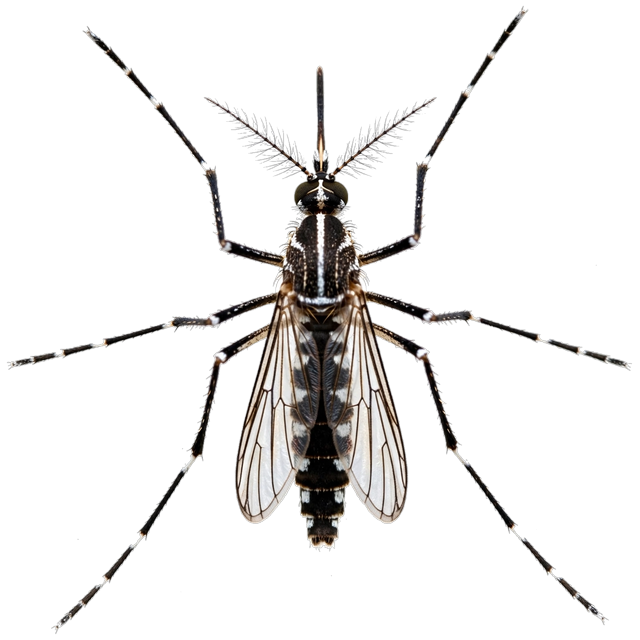 Asian tiger mosquito
Aedes albopictus
An aggressive daytime biter with white racing stripes, an invader marching north into Ontario.
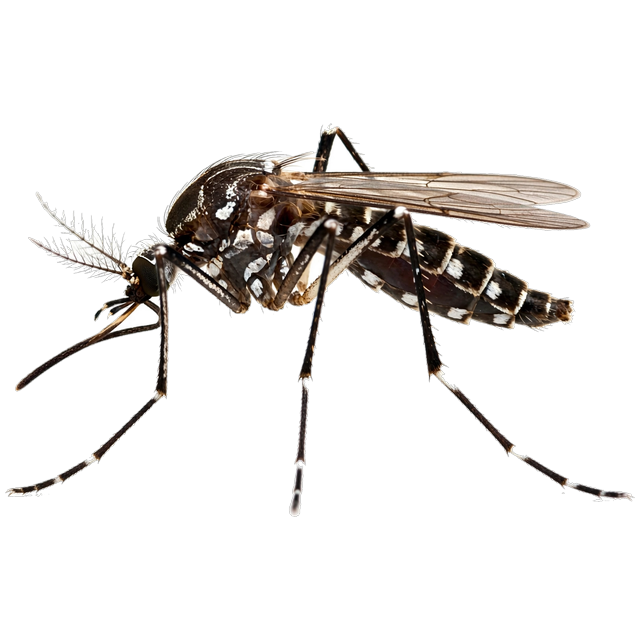 Inland floodwater mosquito
Aedes vexans
The 'after-the-rain' mosquito, floods hatch its eggs by the million and evenings become miserable.
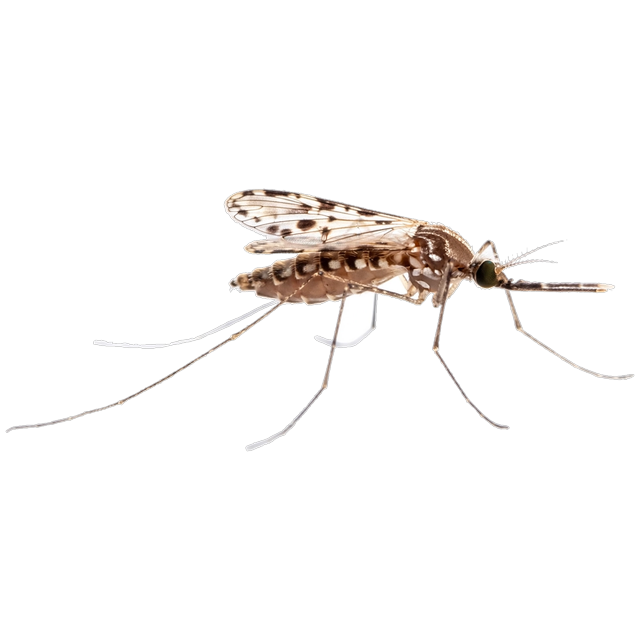 Malaria mosquito
Anopheles spp.
The mosquito genus behind malaria, present in Ontario, but malaria itself is long gone from here.
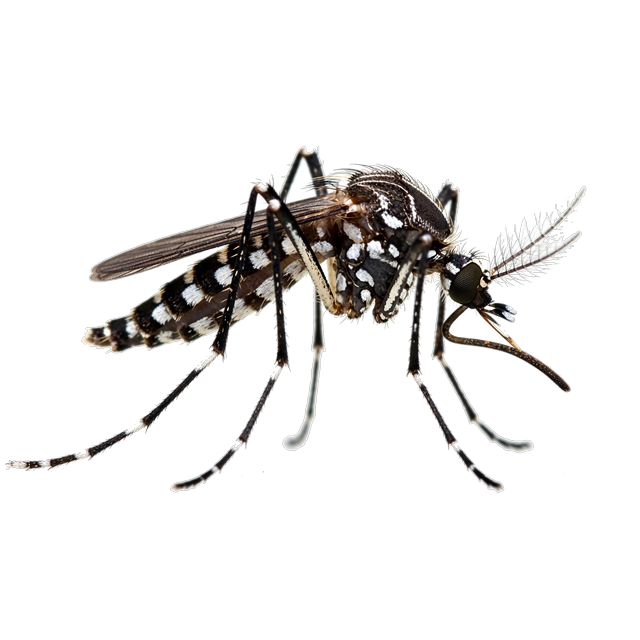 Yellow fever mosquito
Aedes aegypti
A dark mosquito with white markings, found in the southern US.
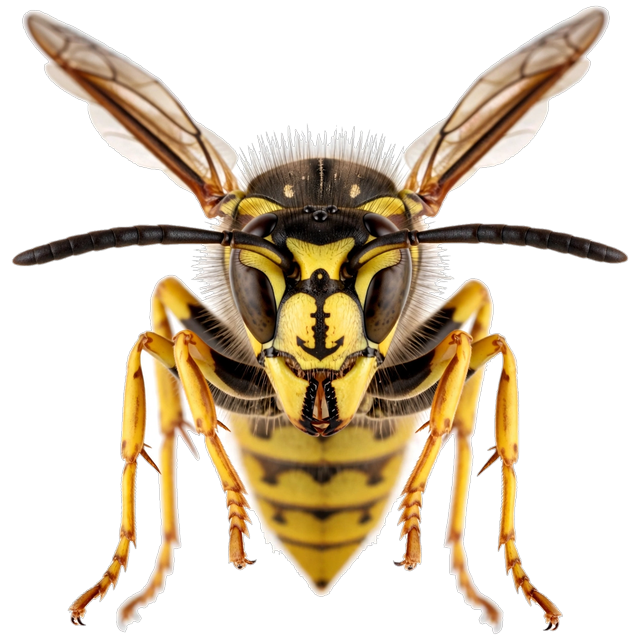
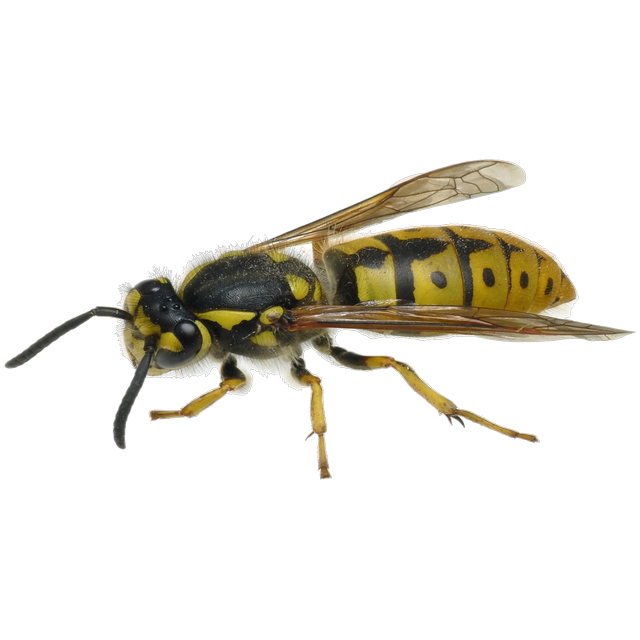 German yellowjacket
Vespula germanica
The picnic-crashing wasp of late summer, an aggressive scavenger that nests underground and in wall voids.
 Eastern yellowjacket
Vespula maculifrons
Ontario's native picnic wasp, nearly identical to the German yellowjacket, with an anchor mark on its face.
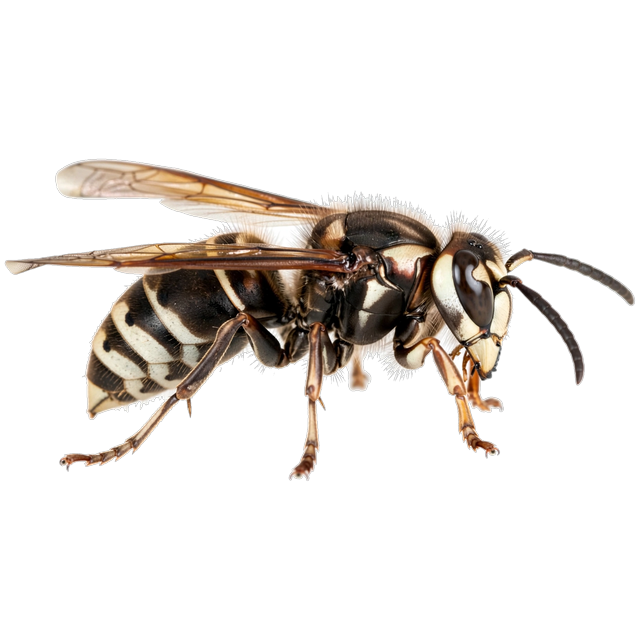 Bald-faced hornet
Dolichovespula maculata
Big black-and-white wasps in hanging paper footballs, fierce at the nest, useful predators away from it.
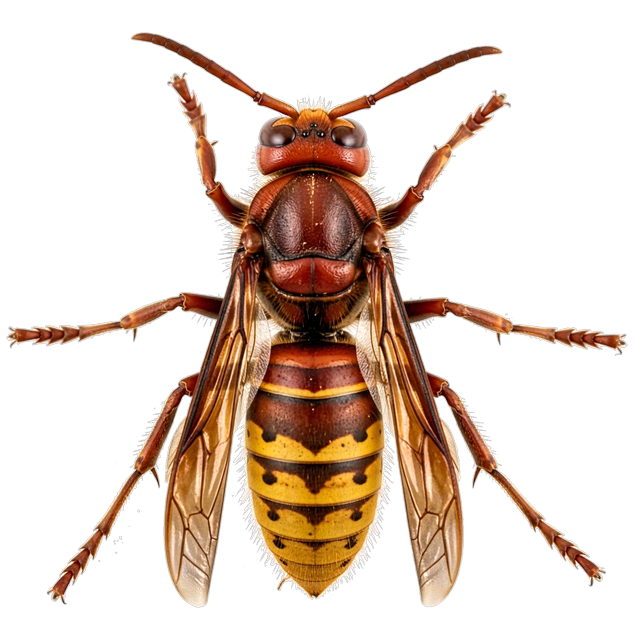 European hornet
Vespa crabro
Ontario's largest social wasp, brown and yellow, active at night, humming around porch lights in late summer.
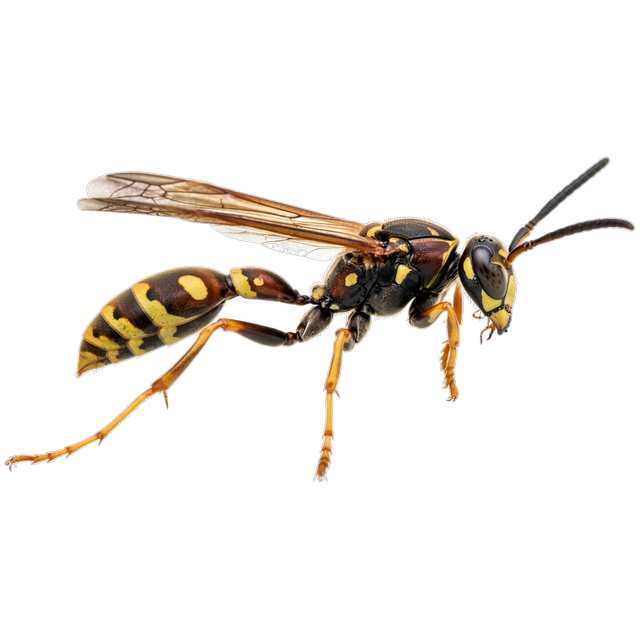 Paper wasp
Polistes spp.
Slender wasps with open umbrella nests under your eaves, docile neighbours and caterpillar hunters.
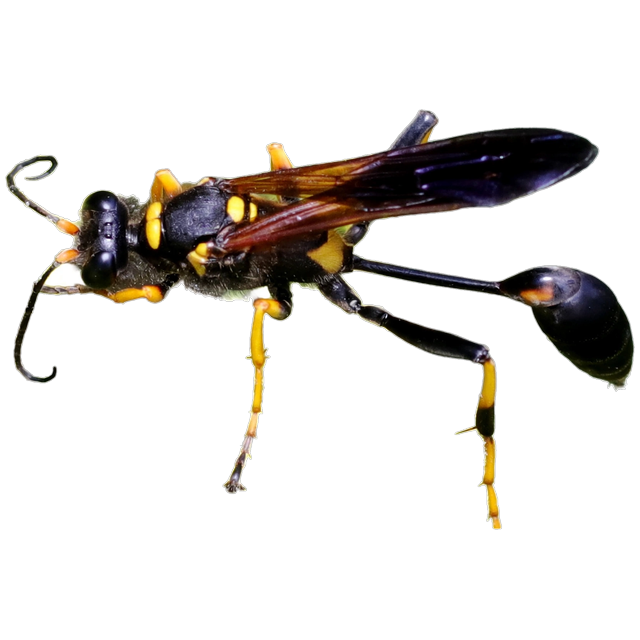 Mud dauber
Sceliphron caementarium
Solitary wasps that build mud tubes and stock them with paralyzed spiders, they never defend a nest.
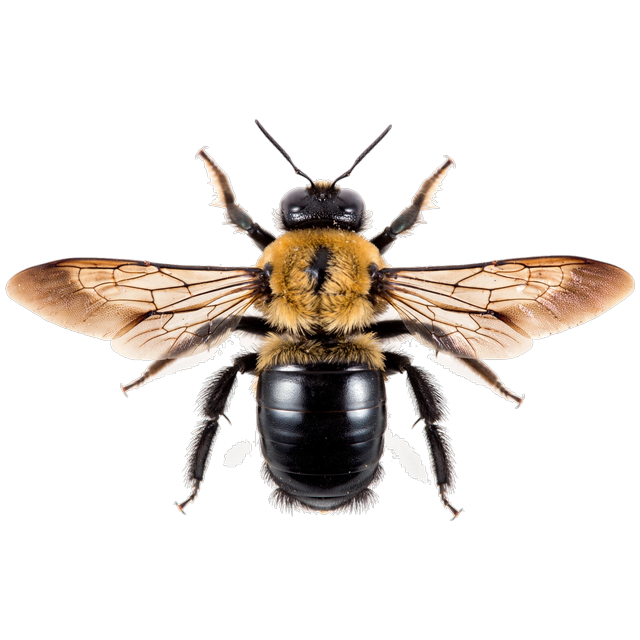 Carpenter bee
Xylocopa virginica
Big bees that drill perfect round holes in your deck, the noisy males can't sting at all.
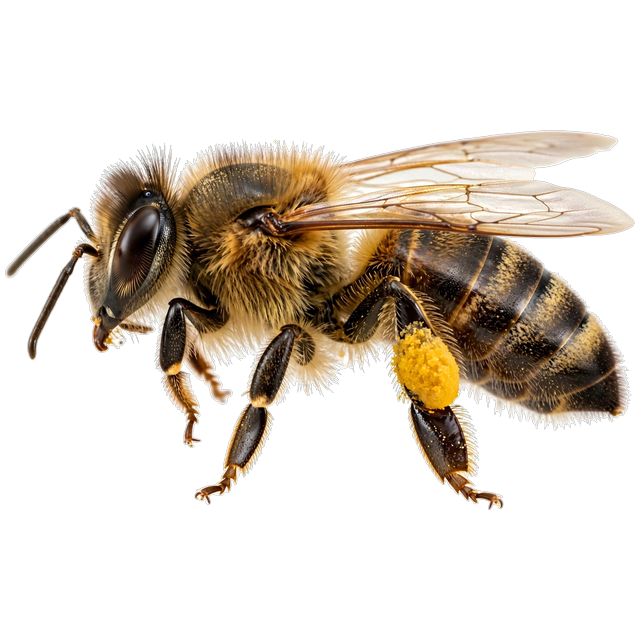 Honeybee
Apis mellifera
The managed pollinator behind a third of our crops, a swarm is a beekeeper's call, never an extermination.
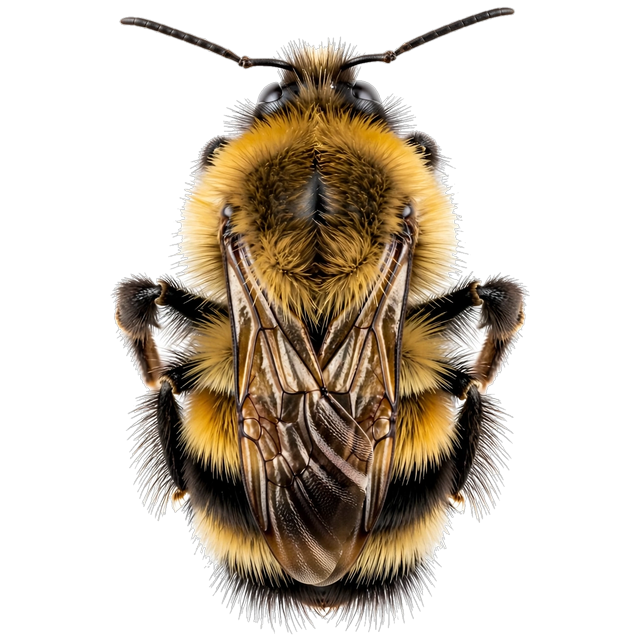 Bumblebee
Bombus spp.
Big fuzzy native pollinators, including endangered species that need protection, not pest control.
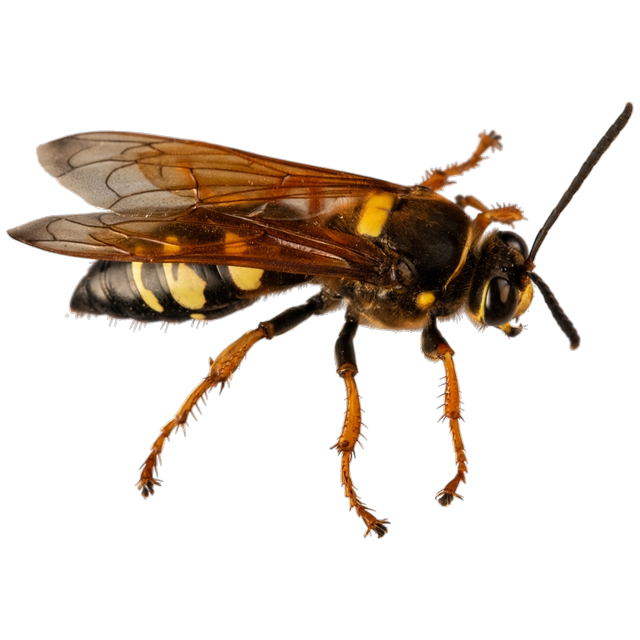 Cicada killer wasp
Sphecius speciosus
A huge black-and-yellow wasp that hunts cicadas; rarely stings people.
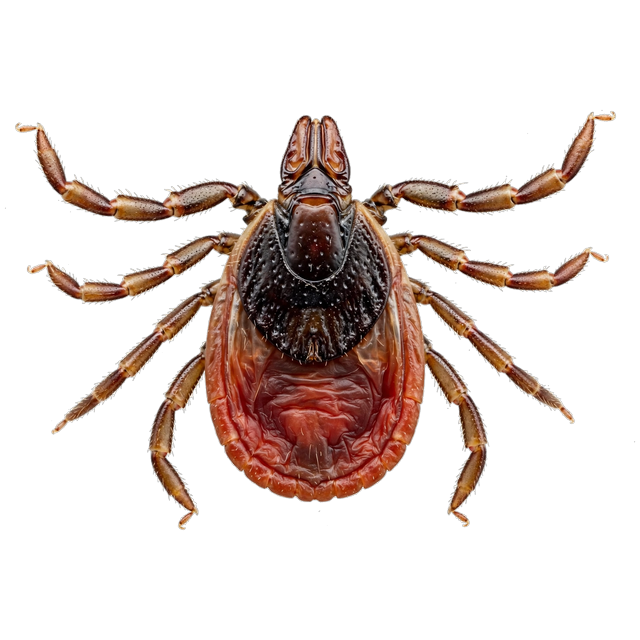 Black-legged tick
Ixodes scapularis
The sesame-seed-sized tick behind Lyme disease, check yourself after the woods, not your basement.
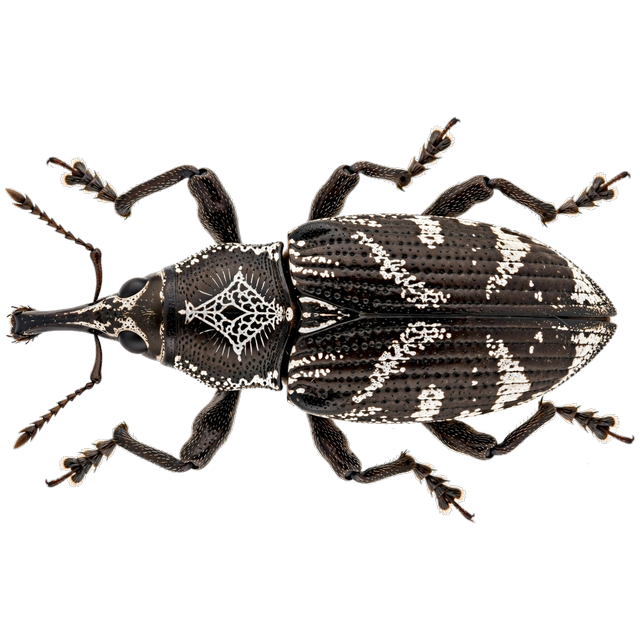 American dog tick
Dermacentor variabilis
The big ornate tick your dog brings home from the field, a spring and summer biter.
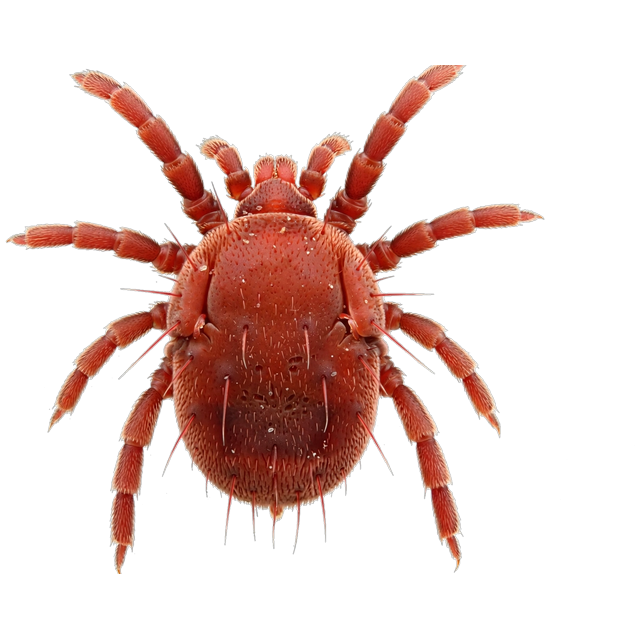 Bird mite
Ornithonyssus spp.
The invisible biter that appears when the birds leave, if it itches after a nest was removed, suspect this mite.
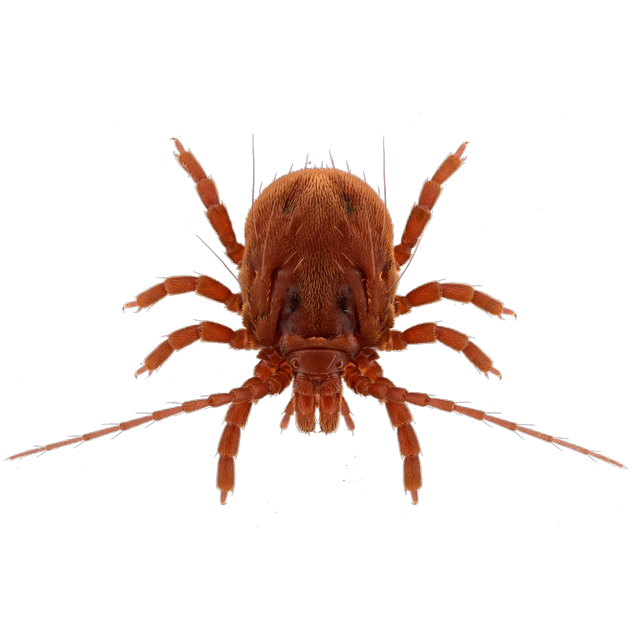 Clover mite
Bryobia praetiosa
The tiny red dots marching across your sunny windowsill in spring, they don't bite, they just visit in armies.
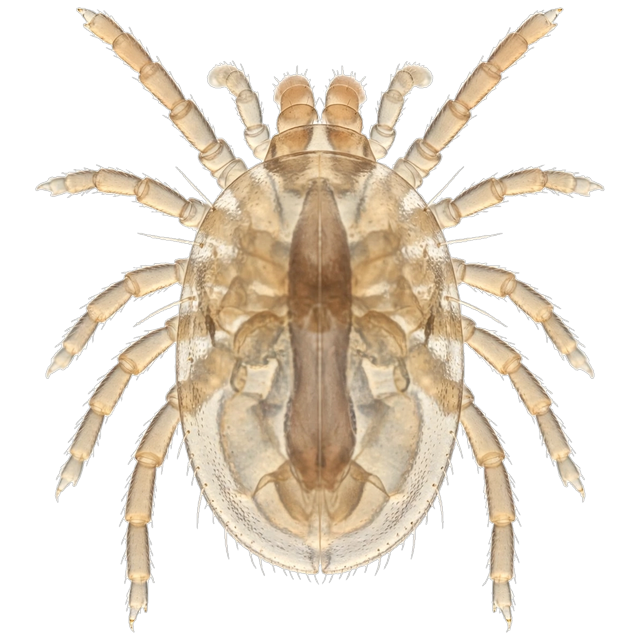 House dust mite
Dermatophagoides spp.
The invisible roommate in your mattress, you can't see it, but your allergies can.
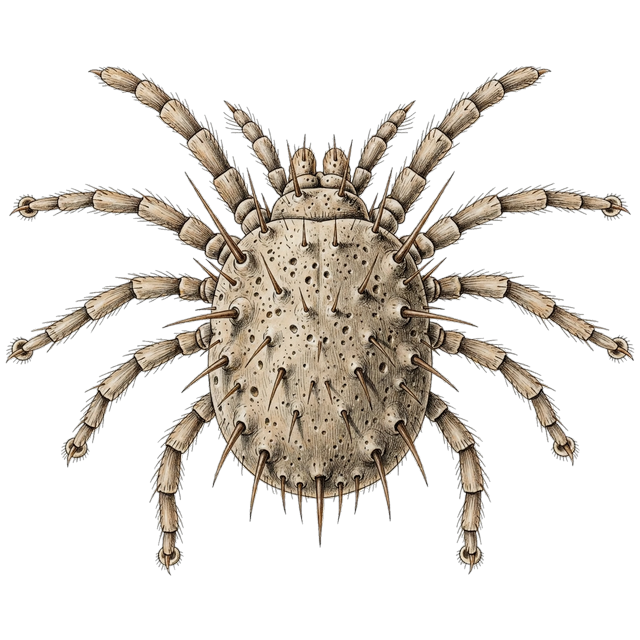 Scabies mite
Sarcoptes scabiei
The burrowing mite behind scabies, a medical condition, not a pest-control job.
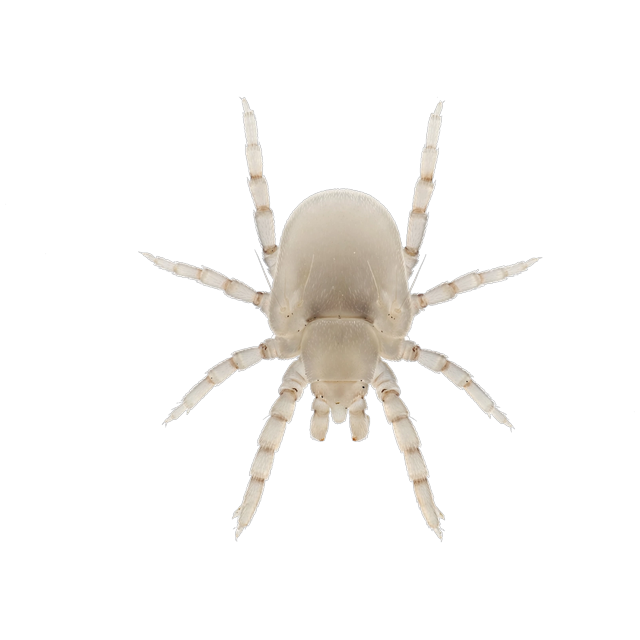 Stored-product mite
Tyrophagus putrescentiae
The 'mite dust' in your old flour, a sign the food went damp, not a sign of a dirty kitchen.
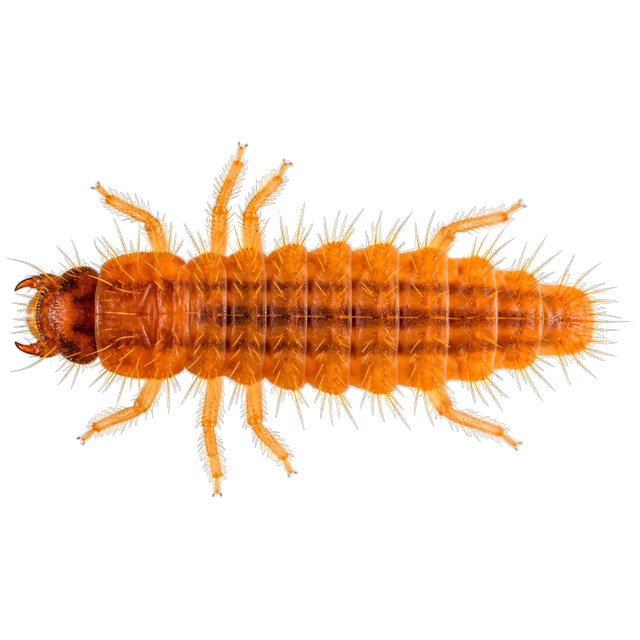 Chigger
Trombiculidae
The itchy red welts from the tall grass, caused by a baby mite that doesn't burrow, despite the legend.
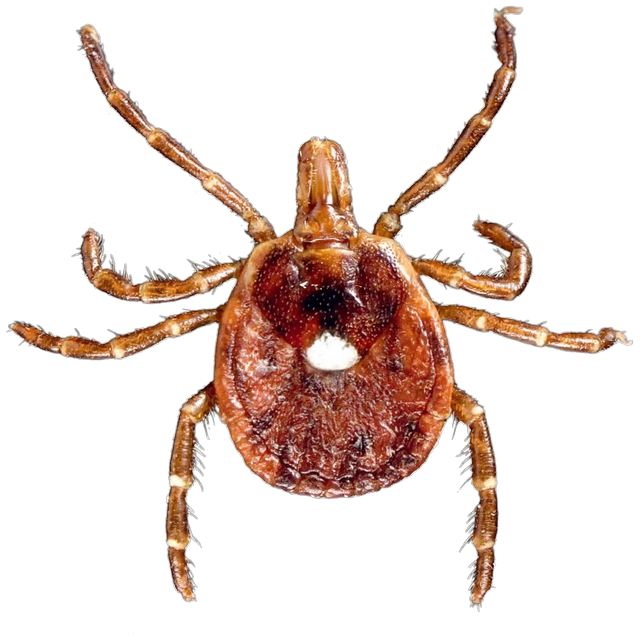 Lone star tick
Amblyomma americanum
An aggressive eastern US tick, the female carries a single white spot on her back.
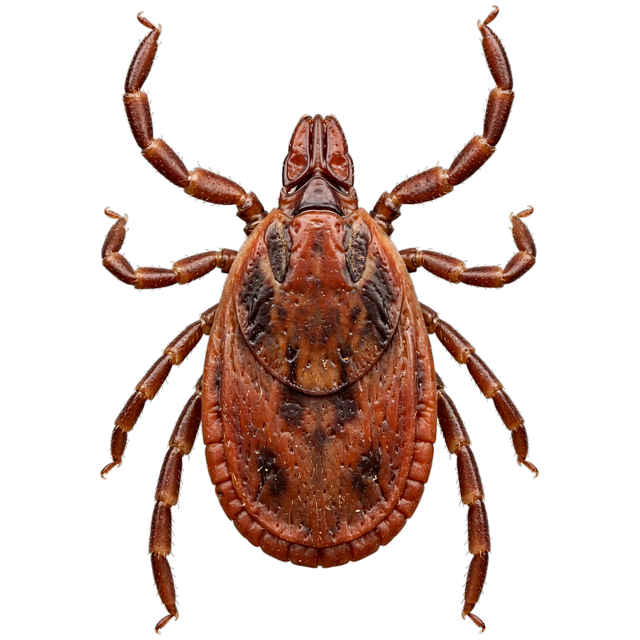 Brown dog tick
Rhipicephalus sanguineus
A reddish-brown tick that infests homes and kennels in the southern US.
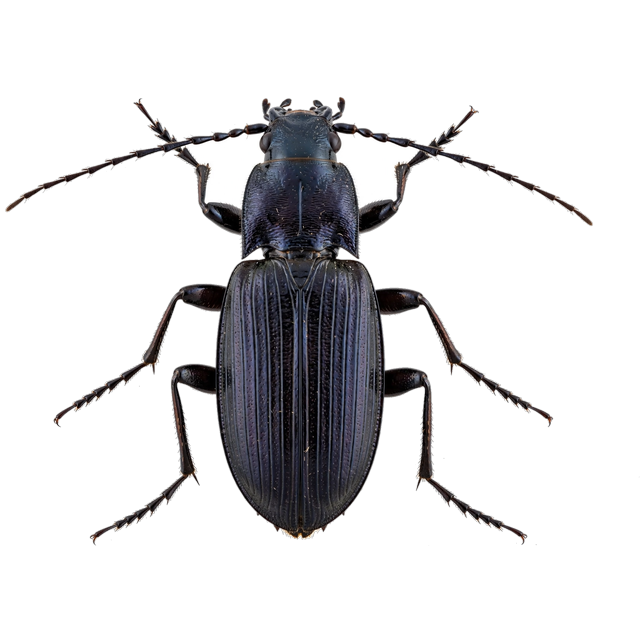 House spider
Parasteatoda tepidariorum
The cobweb spider in the corner of your basement window, harmless, and it eats other bugs.
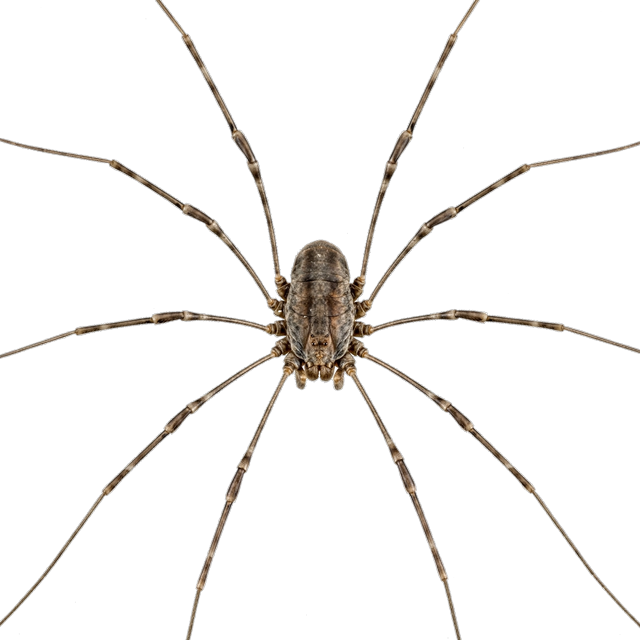 Cellar spider
Pholcus phalangioides
The spindly spider that bounces in its web when startled, it hunts and eats other spiders.
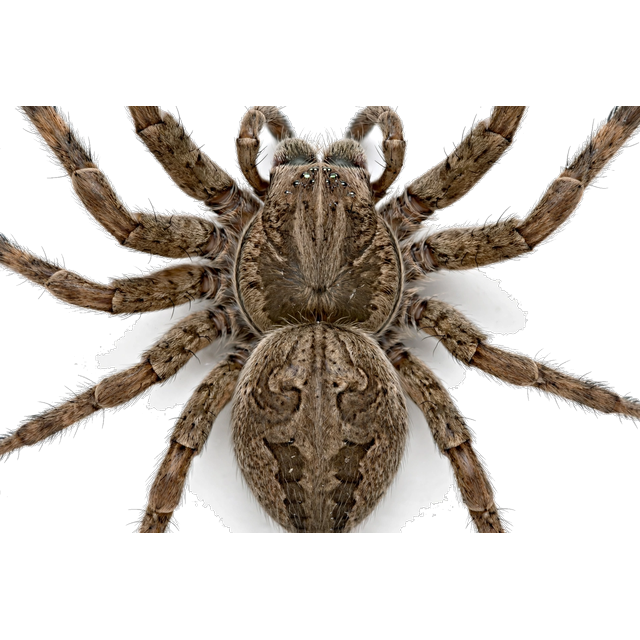 Wolf spider
Lycosidae
The big fast hunter sprinting across your basement floor, frightening to look at, not dangerous.
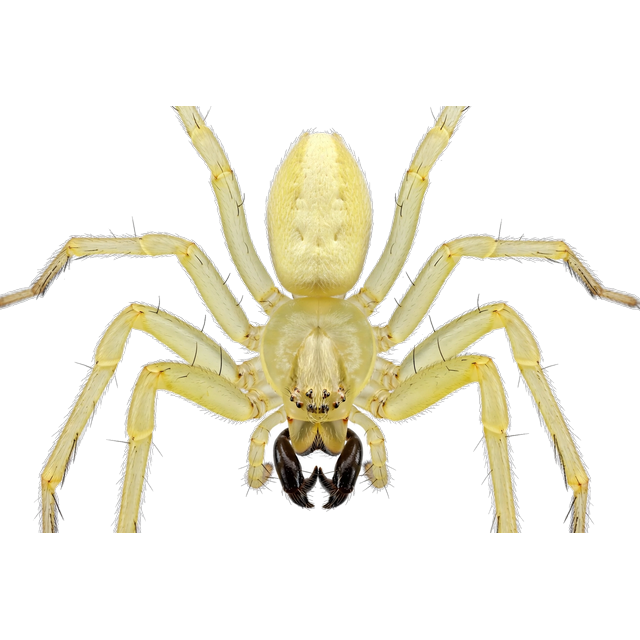 Yellow sac spider
Cheiracanthium mildei
The pale spider sleeping in a silk sleeping bag behind your picture frames, blamed for far more bites than it delivers.
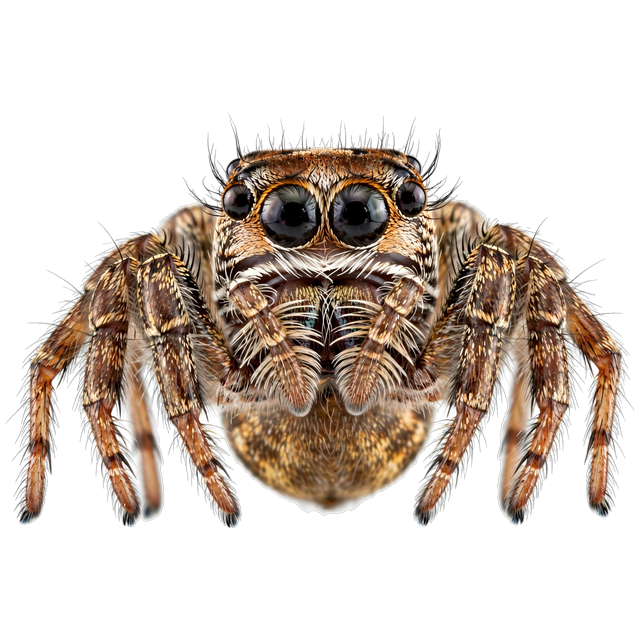 Jumping spider
Salticidae
The tiny curious spider that watches you back, the friendliest spider in your house.
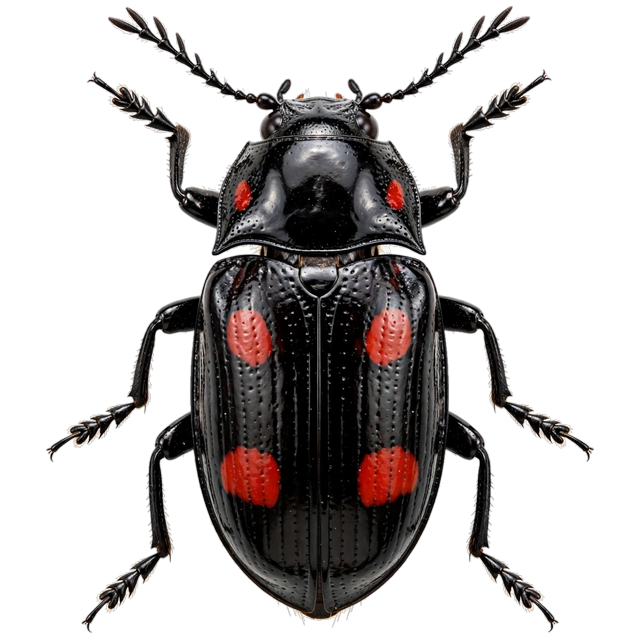 Northern black widow
Latrodectus variolus
Ontario's only spider with a medically significant bite, rare, shy, and almost never inside homes.
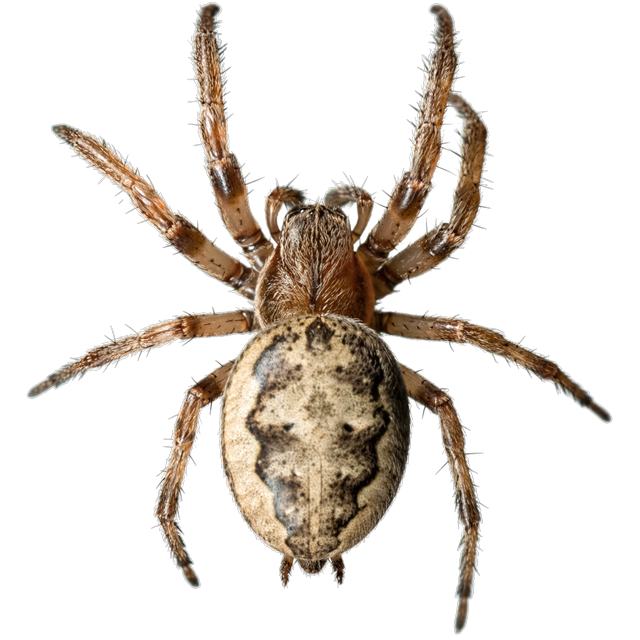 Hobo spider
Eratigena agrestis
A Pacific Northwest spider wrongly famous for dangerous bites, not found in Ontario.
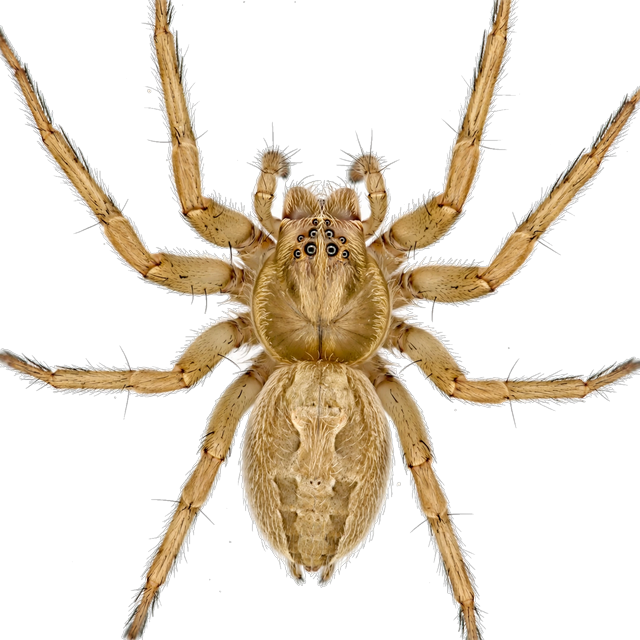 Brown recluse
Loxosceles reclusa
The spider everyone fears and almost no one in Ontario has ever actually seen.
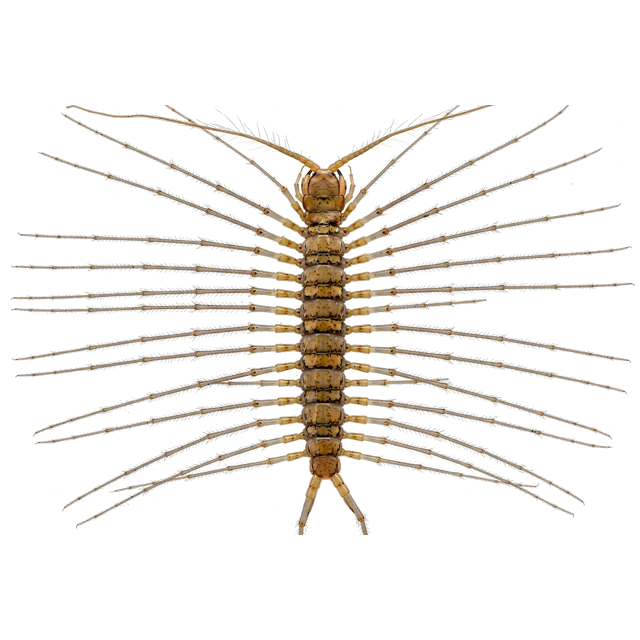 House centipede
Scutigera coleoptrata
The thirty-legged sprinter in your bathtub, it can't climb out, and it's hunting the real pests.
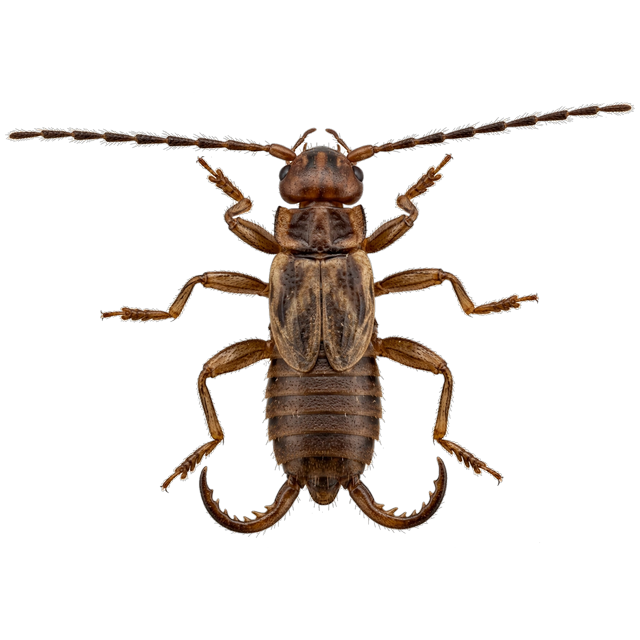 European earwig
Forficula auricularia
The pincer-tailed garden visitor, it won't crawl in your ear, whatever the name suggests.
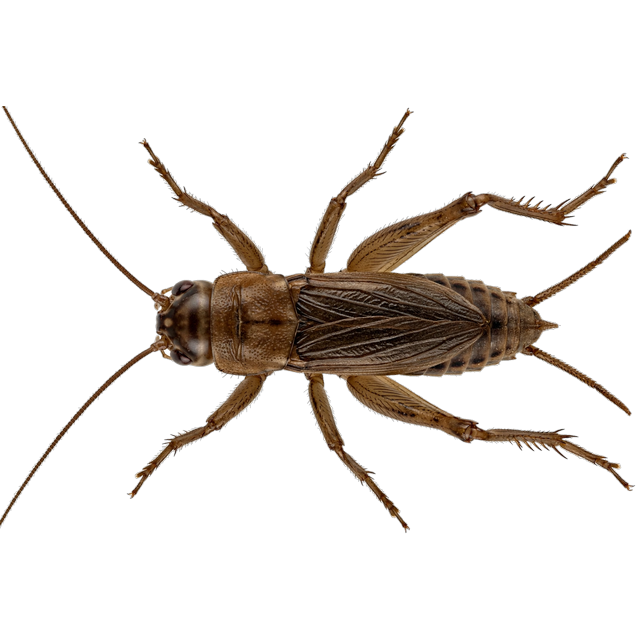 House cricket
Acheta domesticus
The midnight violinist behind your furnace, one male cricket, one very loud night.
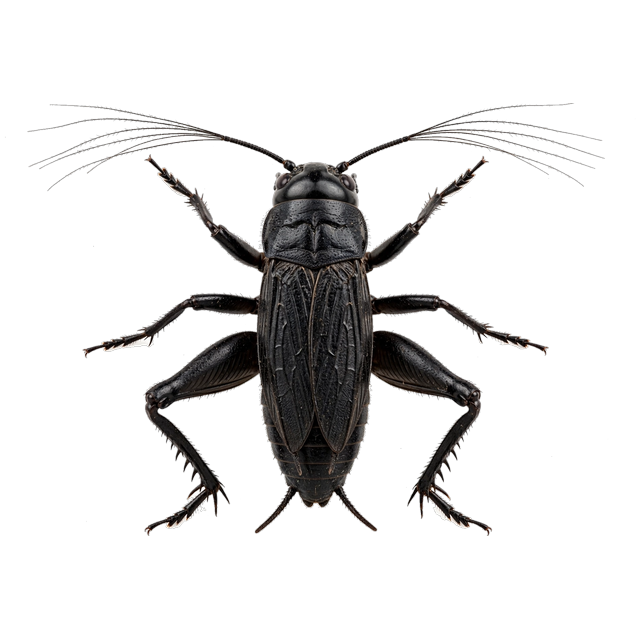 Field cricket
Gryllus spp.
The big black singer at your doorstep every September, an outdoor cricket that got lost.
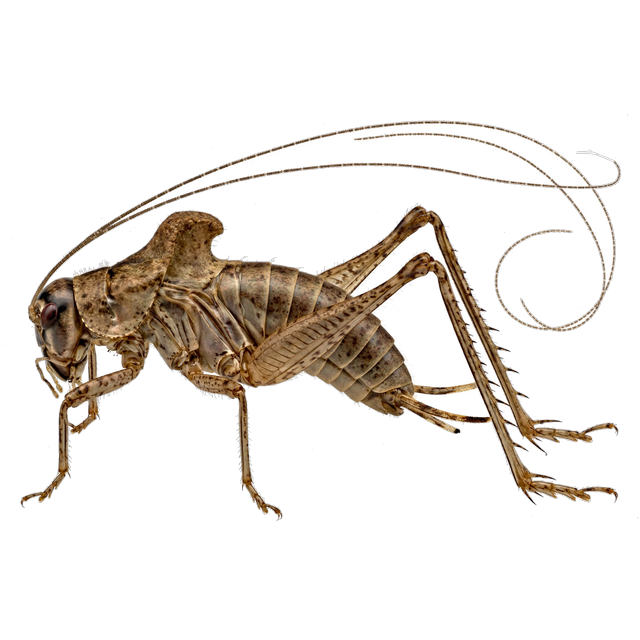 Camel cricket
Ceuthophilus spp.
The silent humpbacked jumper in your crawlspace, it never sings, it just startles.
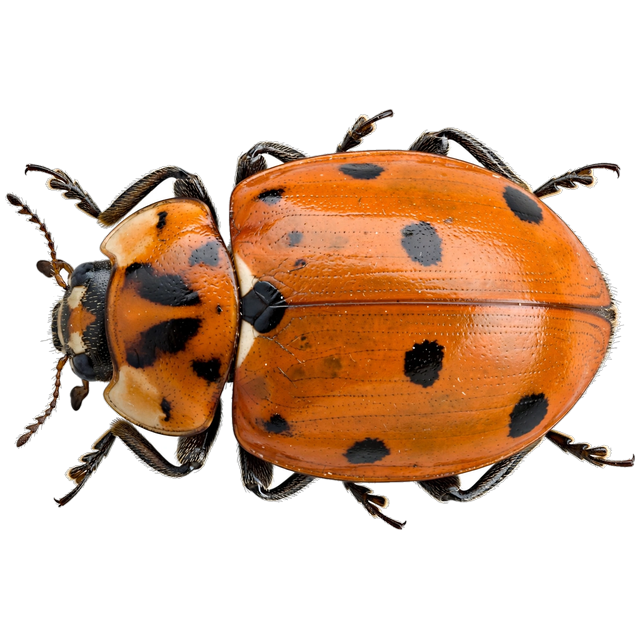 Asian lady beetle
Harmonia axyridis
The helpful garden ladybug that overstays its welcome, thousands of them, in your walls, every fall.
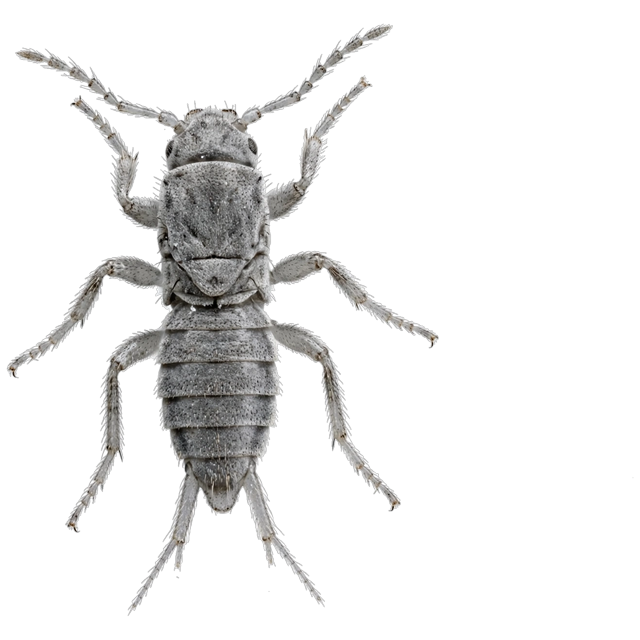 Springtail
Collembola
The microscopic jumper in your potted plant, a sign of wet soil, not an infestation.
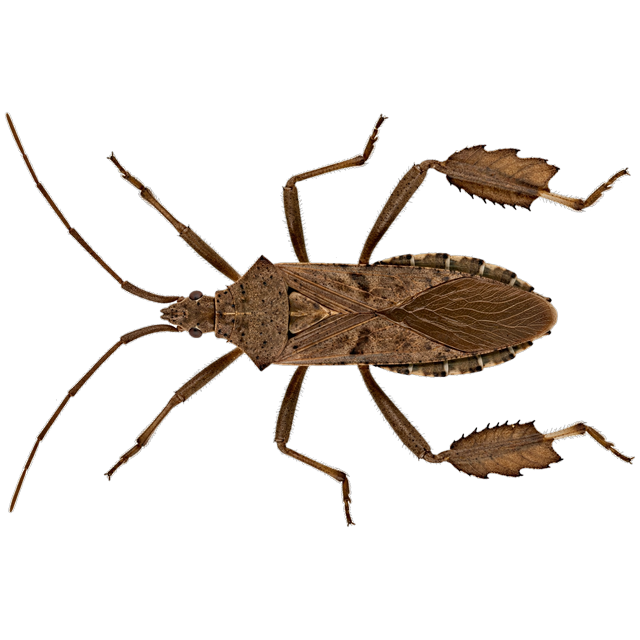 Western conifer seed bug
Leptoglossus occidentalis
The long brown bug mistaken for a kissing bug, it wants your pine cones, not your blood.
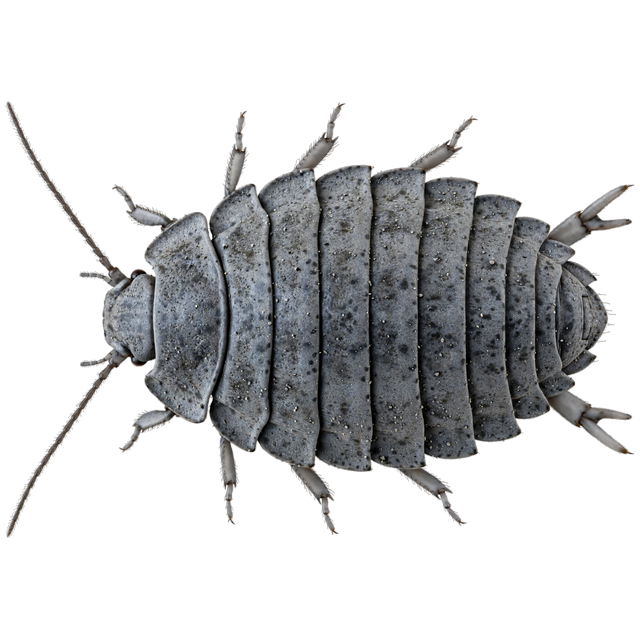 Sowbug
Porcellio scaber
A land-dwelling crustacean, not an insect, that needs damp places to survive.
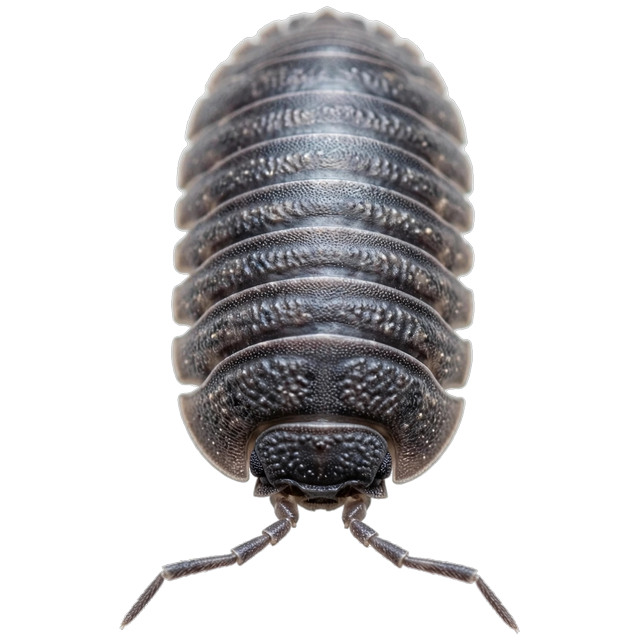 Pillbug
Armadillidium vulgare
The roly-poly that rolls into a perfect ball when disturbed.
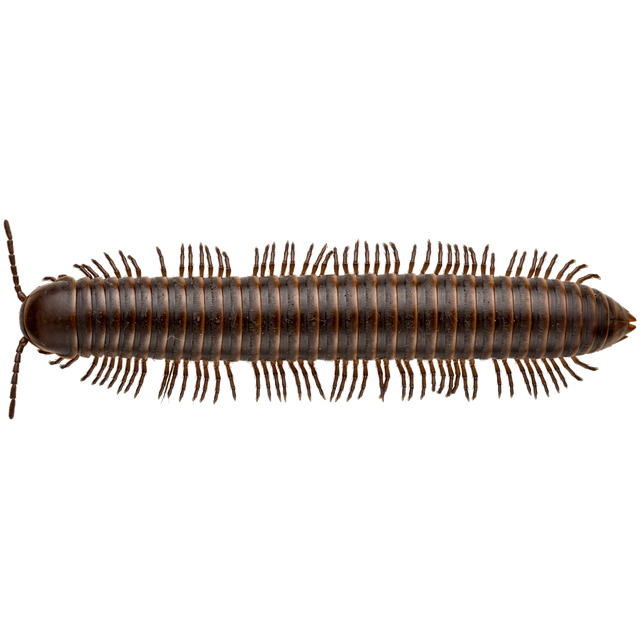 Millipede
Diplopoda
A slow, many-legged decomposer with two pairs of legs on most body segments.
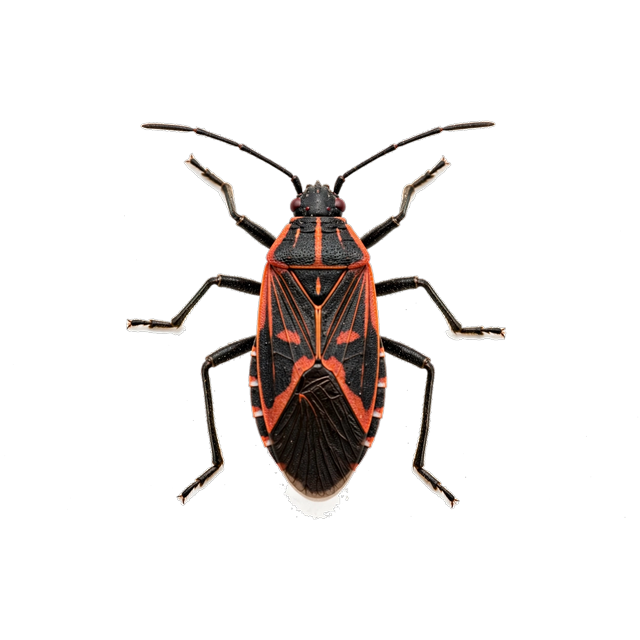 Boxelder bug
Boisea trivittata
The black-and-red bug that masses on sunny walls every fall.
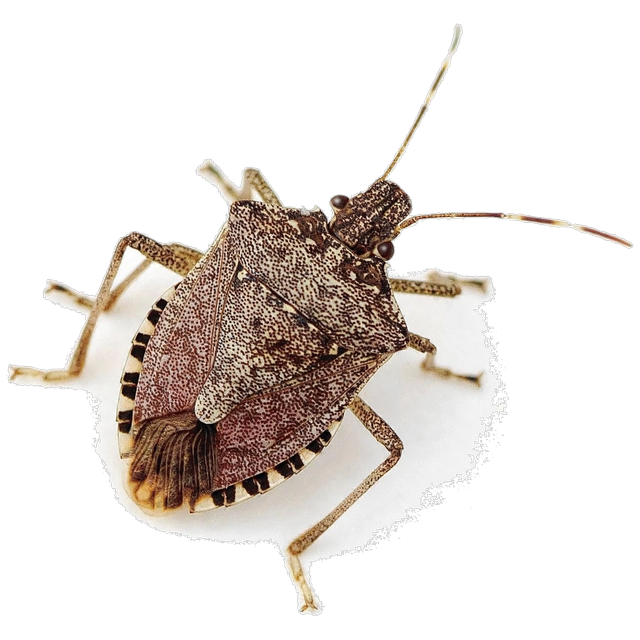 Brown marmorated stink bug
Halyomorpha halys
An invasive stink bug that invades homes in fall and crops in summer.
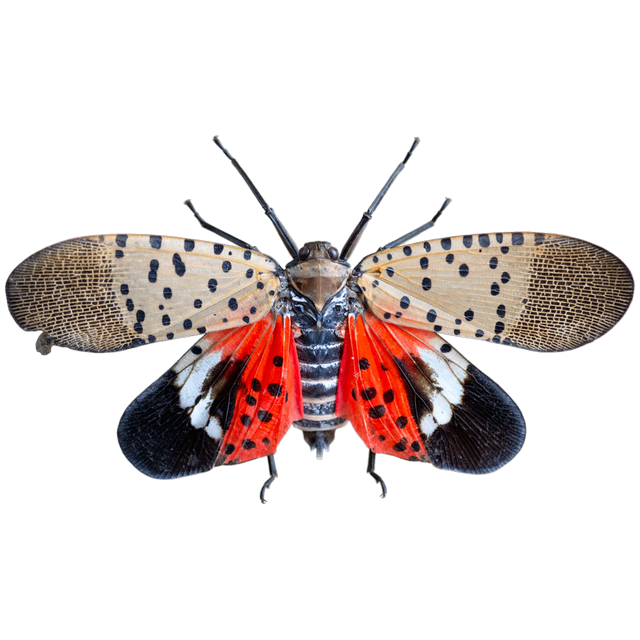 Spotted lanternfly
Lycorma delicatula
A showy invasive planthopper, first detected in Canada (Windsor, Sept 2026), spreading through the eastern US.
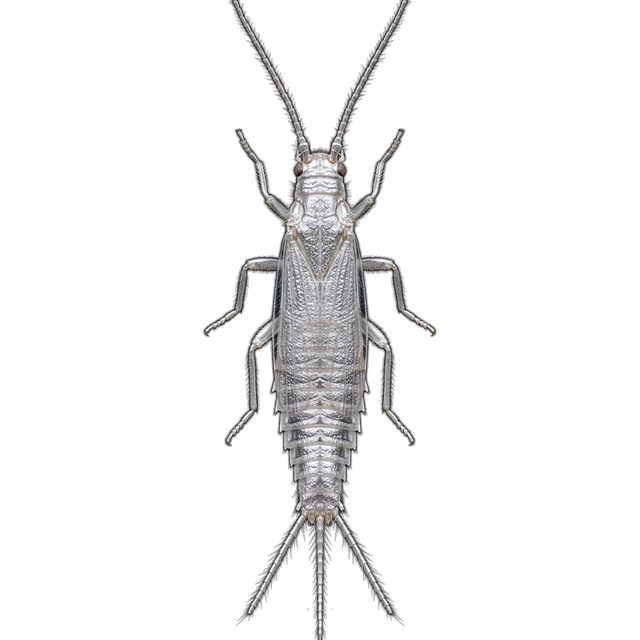 Silverfish
Lepisma saccharinum
The silvery fish that eats your books, a humidity-loving relic that never grew wings.
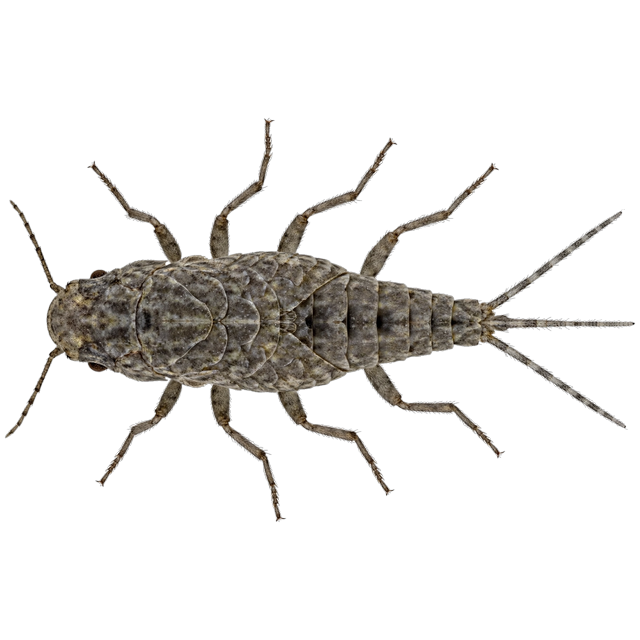 Firebrat
Thermobia domestica
The silverfish's heat-loving cousin, it lives where your furnace lives.
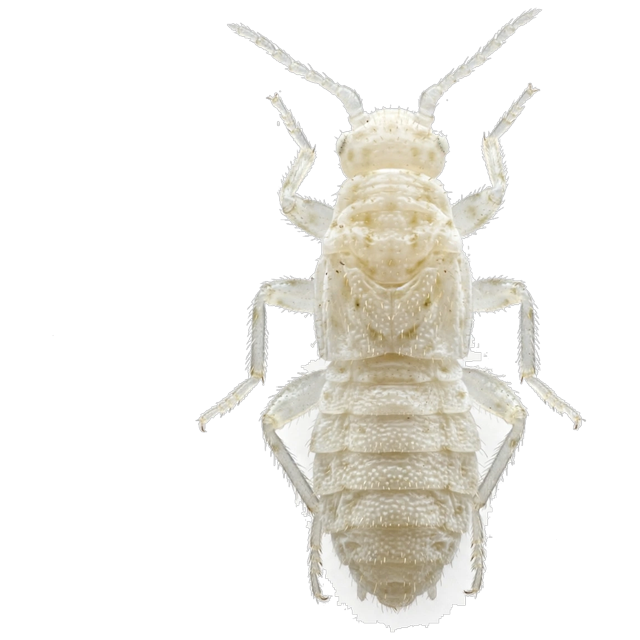 Booklouse
Liposcelis spp.
The 2-millimeter alarm bell for damp books, where booklice gather, mold is growing.
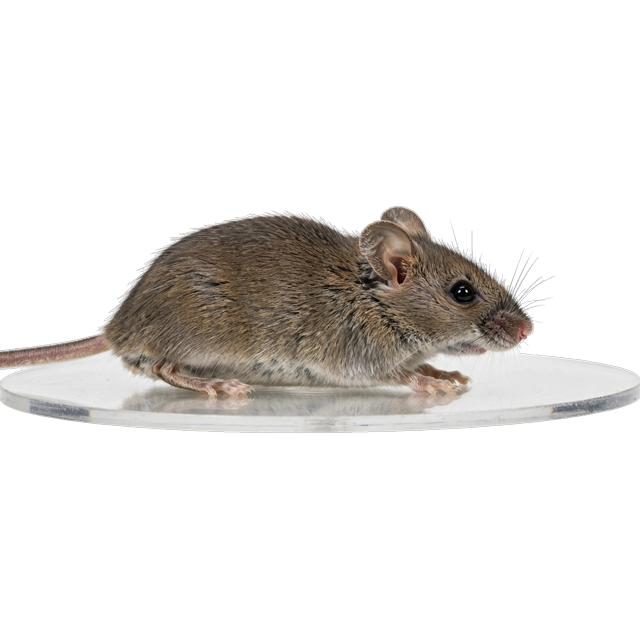 House mouse
Mus musculus
The small, curious rodent that lives inside our walls and pantries.
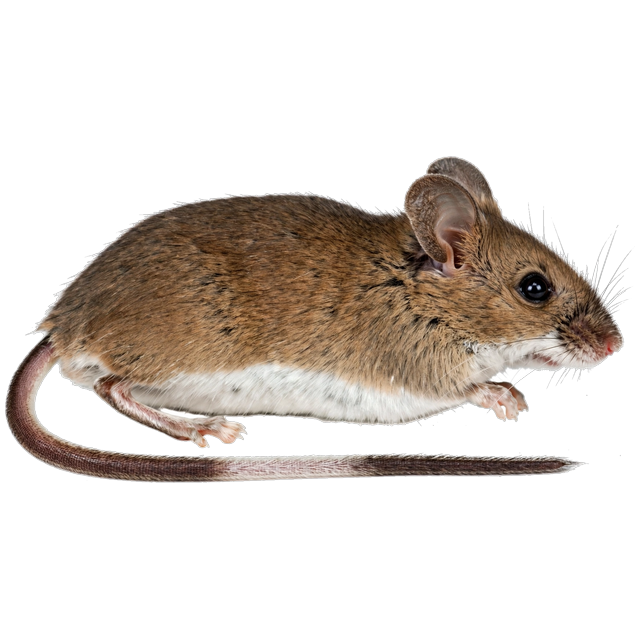 Deer mouse
Peromyscus maniculatus
The white-bellied woodland mouse that carries hantavirus into cabins and sheds.
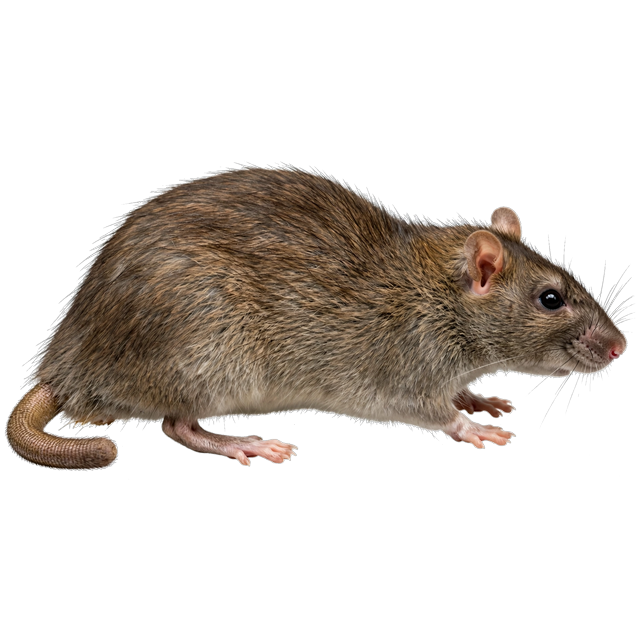 Norway rat
Rattus norvegicus
The burrowing city rat, heavy, wary, and built for sewers and foundations.
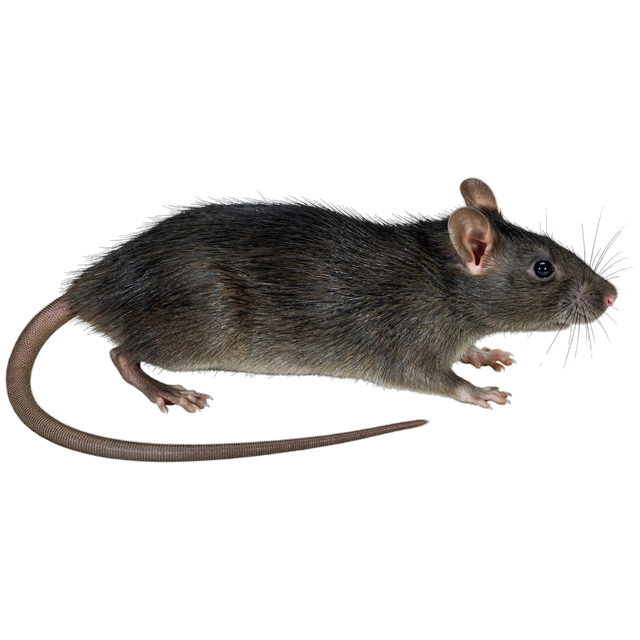 Roof rat
Rattus rattus
The climbing rat, arboreal, agile, and at home in attics and rafters.
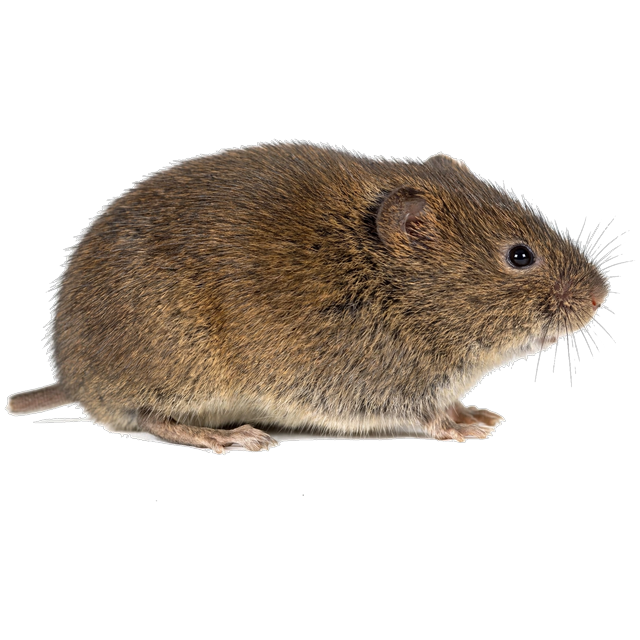 Meadow vole
Microtus pennsylvanicus
The grassland tunneler, surface runways, winter bark-gnawing, and boom-bust cycles.
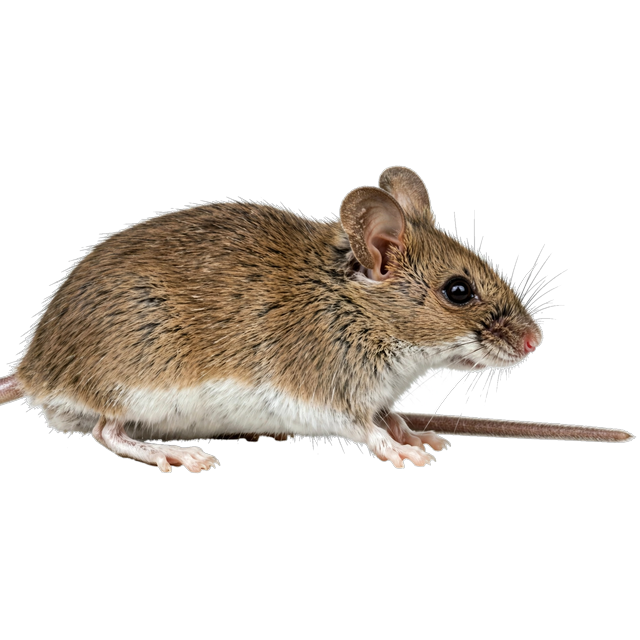 White-footed mouse
Peromyscus leucopus
The deer mouse's twin, and the main animal reservoir of Lyme disease.
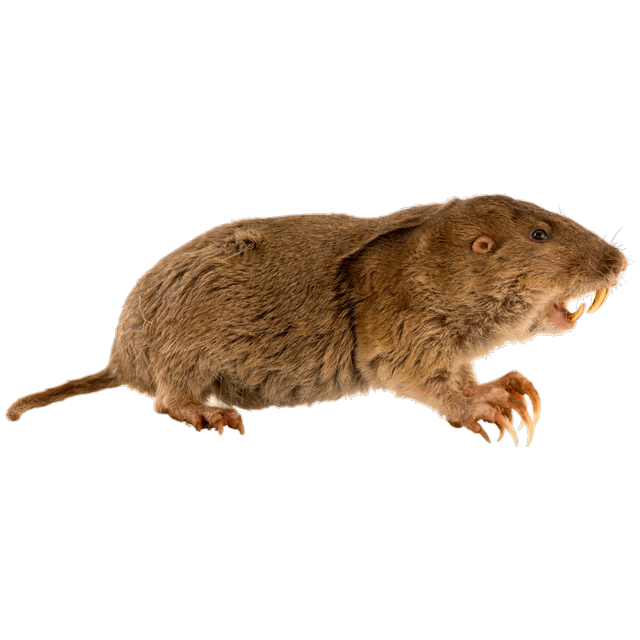 Plains pocket gopher
Geomys bursarius
A burrowing western rodent that pushes fan-shaped mounds onto lawns.
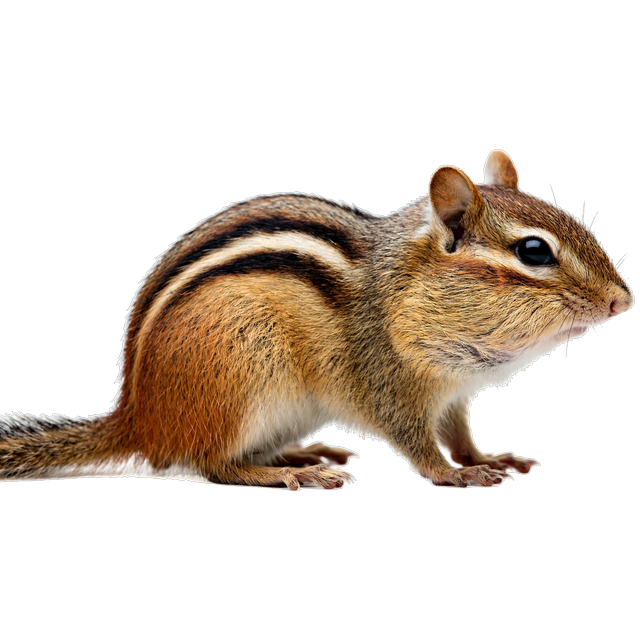 Eastern chipmunk
Tamias striatus
A striped ground squirrel that burrows under patios and raids gardens.
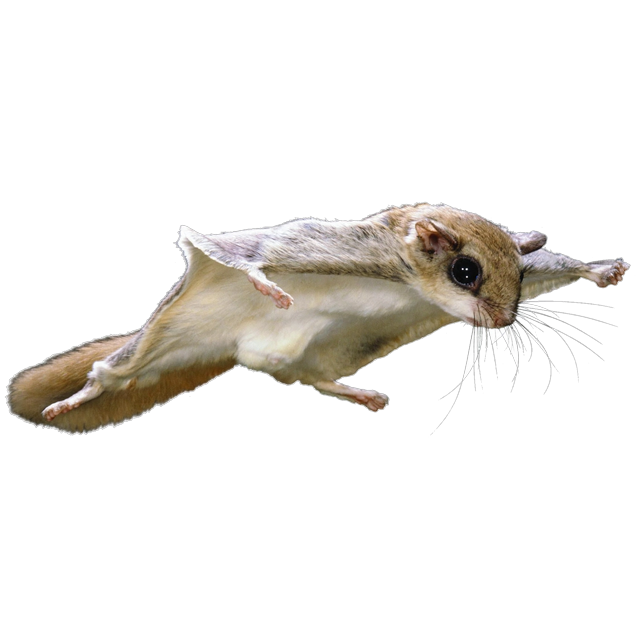 Southern flying squirrel
Glaucomys volans
A nocturnal gliding squirrel that dens in southern Ontario attics.
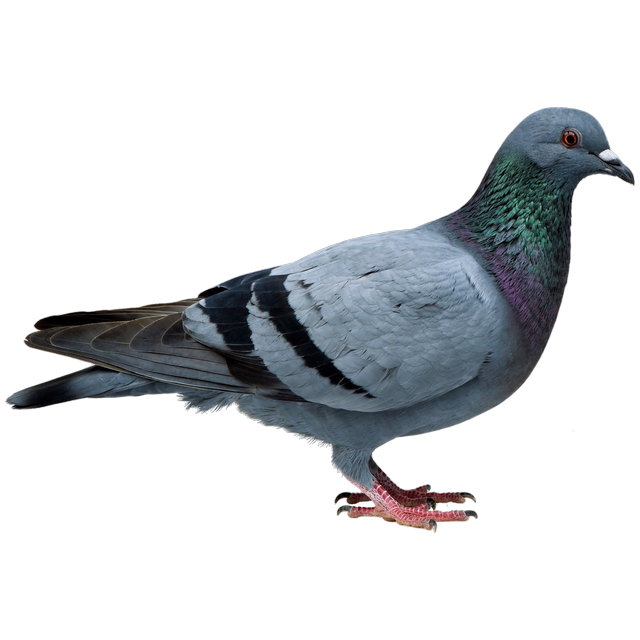 Rock pigeon
Columba livia
The cliff-dweller turned city-dweller, at home on every ledge downtown.
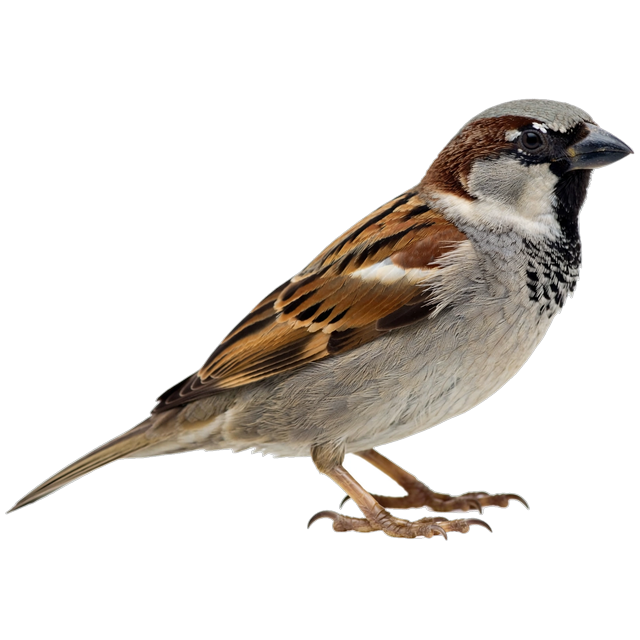 House sparrow
Passer domesticus
The introduced sparrow that out-competes native birds for every cavity in town.
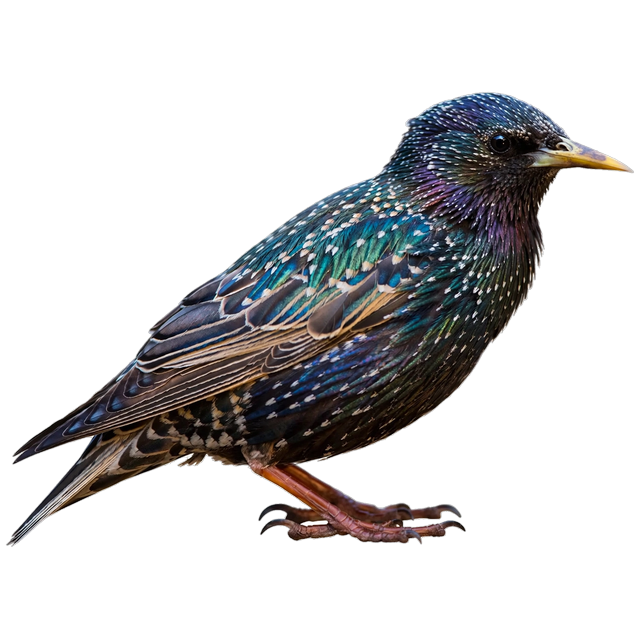 European starling
Sturnus vulgaris
The 1890s introduction that became 200 million birds, master of the murmuration.
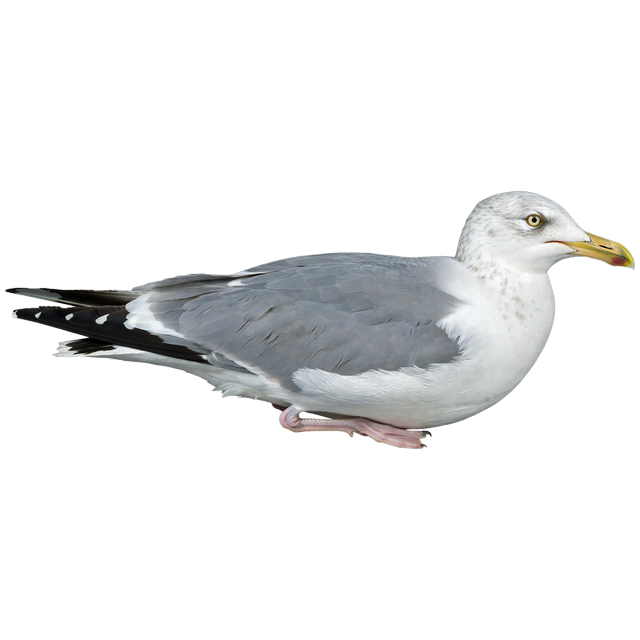 Gull
Larus spp.
The 'seagull' that nests on flat rooftops and commutes to landfills.
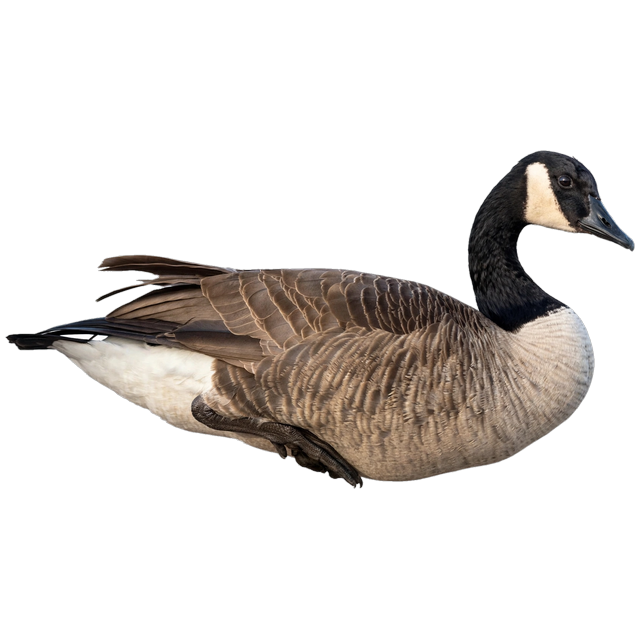 Canada goose
Branta canadensis
A large familiar goose, a noisy, messy nester on lawns and waterfronts.
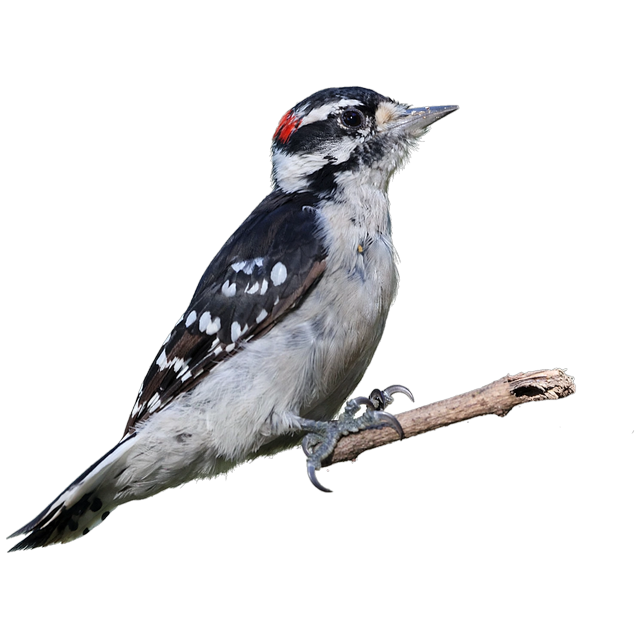 Downy woodpecker
Dryobates pubescens
A small black-and-white woodpecker that drums on houses and trees.
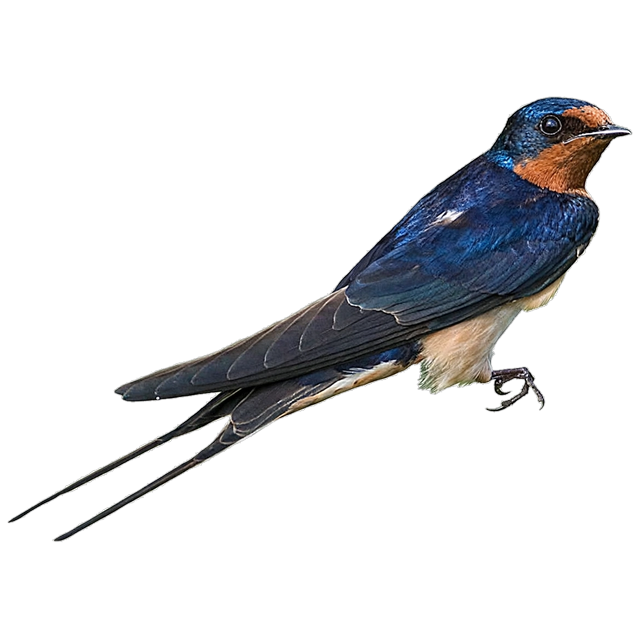 Barn swallow
Hirundo rustica
A graceful swallow with a forked tail that nests in mud cups under eaves.
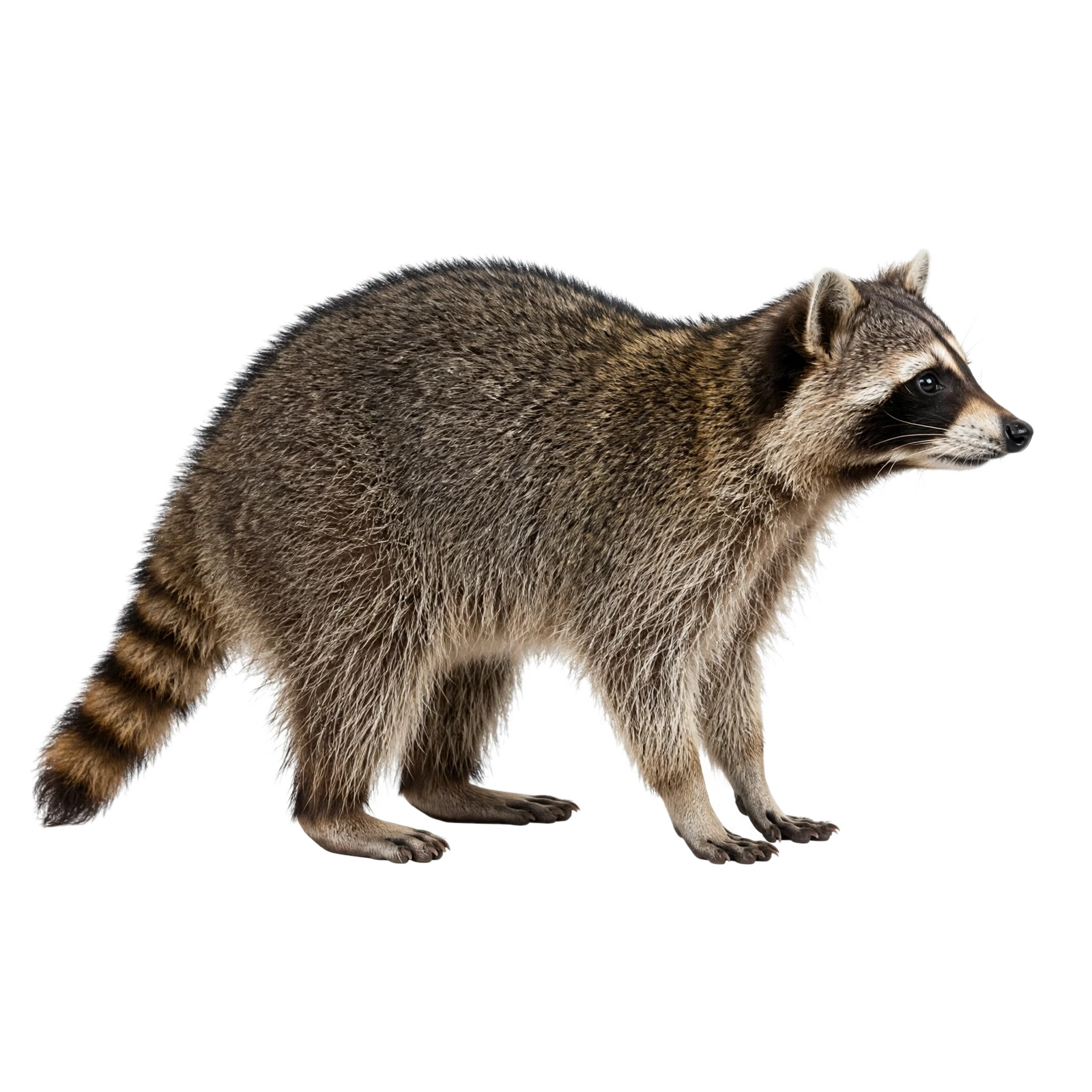 Raccoon
Procyon lotor
North America's masked urban survivor, clever paws, clever problems.
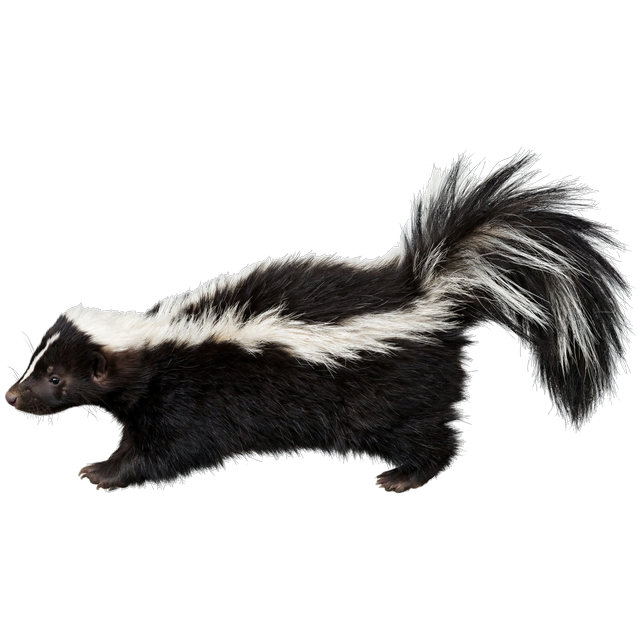 Striped skunk
Mephitis mephitis
The black-and-white chemist, warns first, sprays second.
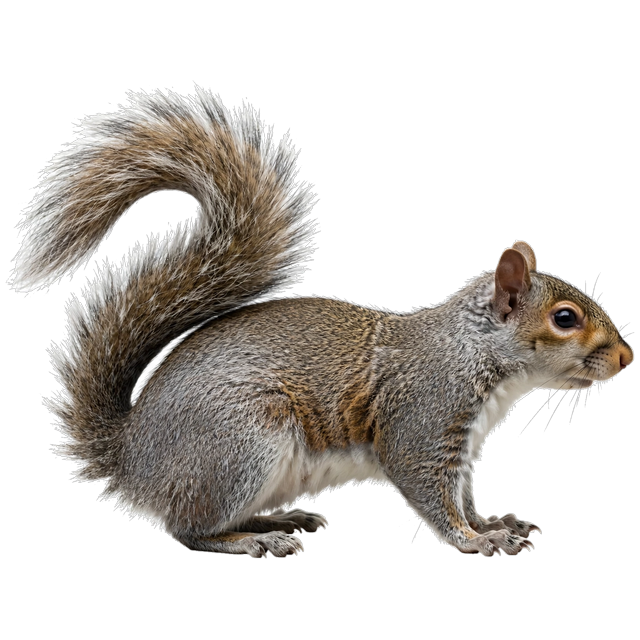 Gray squirrel
Sciurus carolinensis
The diurnal acrobat, plants forests by forgetting where lunch is.
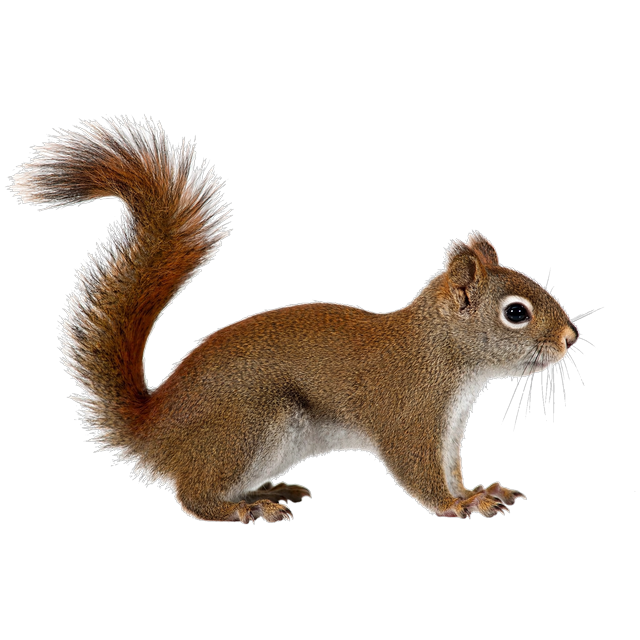 Red squirrel
Tamiasciurus hudsonicus
Small, loud, and fiercely territorial, the forest's alarm system.
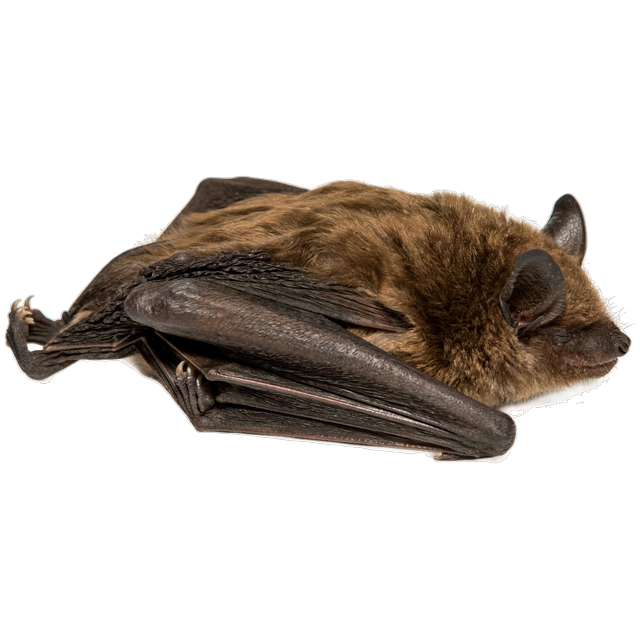 Big brown bat
Eptesicus fuscus
The attic's silent beetle-hunter, eats half its weight nightly.
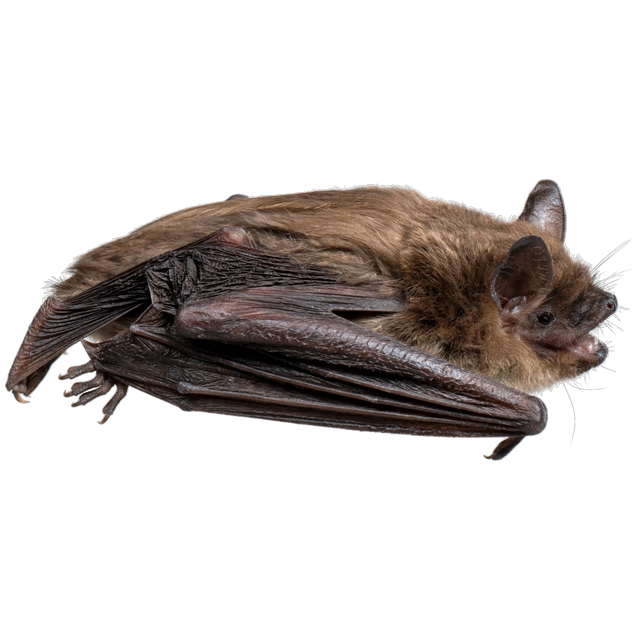 Little brown bat
Myotis lucifugus
A 10-gram insect vacuum, and Ontario's most imperiled bat.
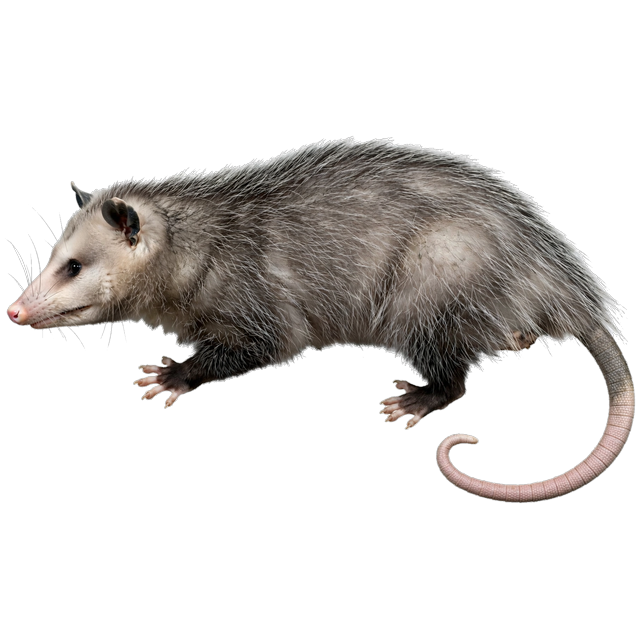 Virginia opossum
Didelphis virginiana
North America's only marsupial, 50 teeth and a talent for theatrics.
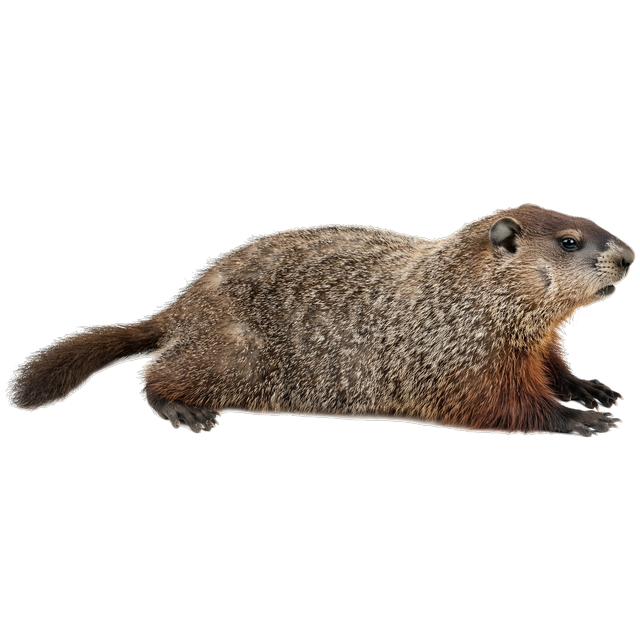 Groundhog
Marmota monax
The true hibernator, sleeps half the year, digs the other half.
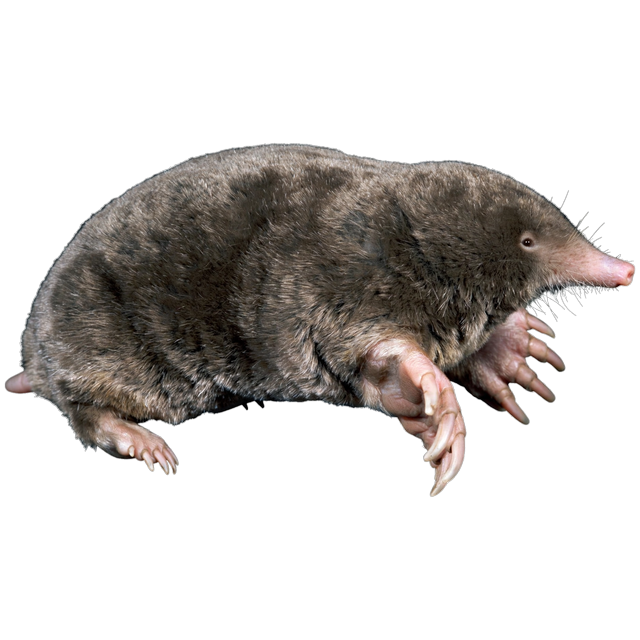 Eastern mole
Scalopus aquaticus
A burrowing mole whose Canadian range is a small corner of extreme southwestern Ontario.
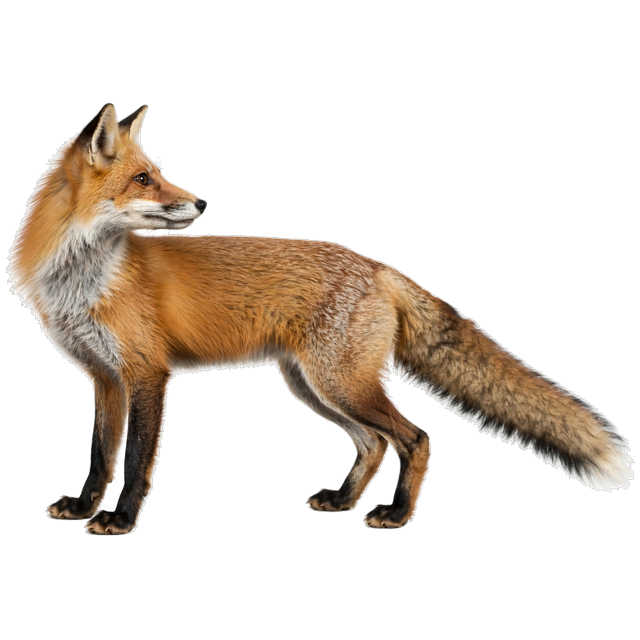 Red fox
Vulpes vulpes
A rust-red wild canid common in suburbs across Ontario.
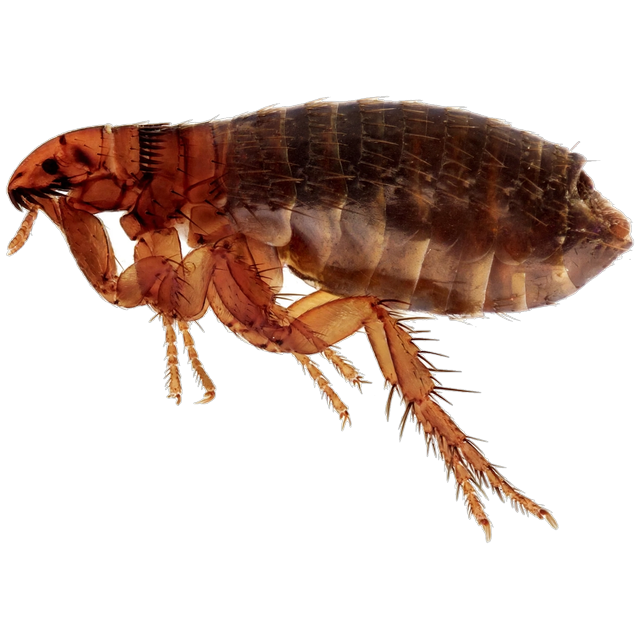 Cat flea
Ctenocephalides felis
A tiny wingless jumping insect, the flea most commonly found on cats and dogs in Ontario homes.
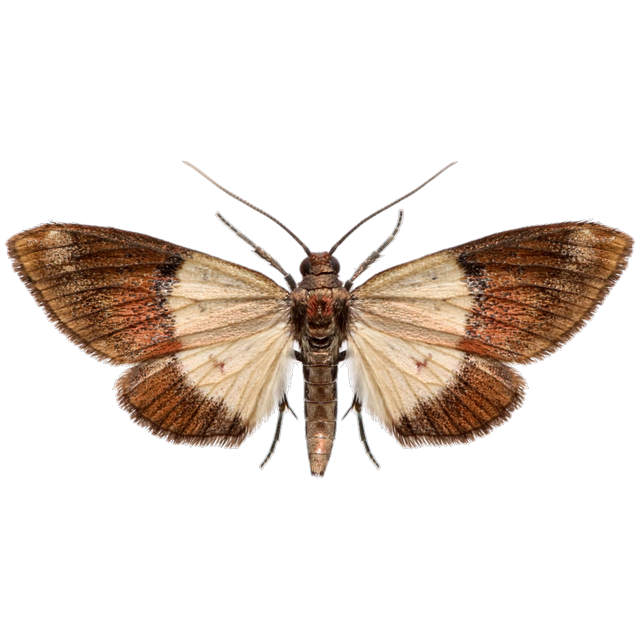 Indianmeal moth
Plodia interpunctella
A small pantry moth whose larvae infest flour, cereal, and dry pet food.
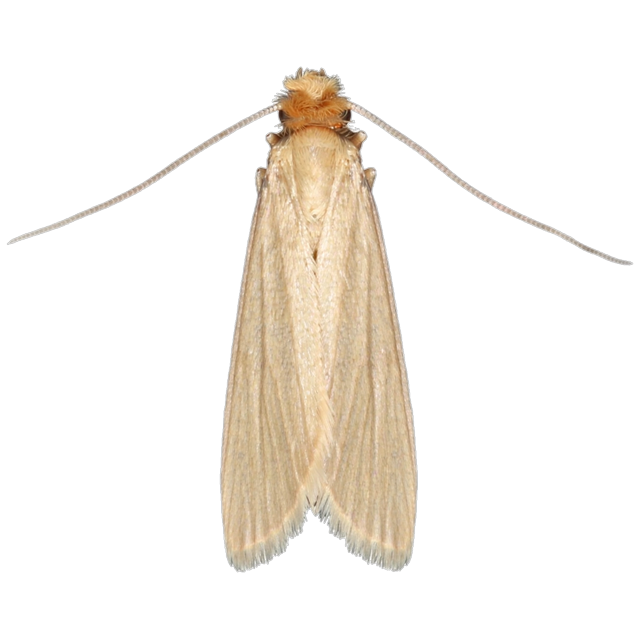 Webbing clothes moth
Tineola bisselliella
A small buff-colored moth whose larvae chew holes in wool, silk, and fur.
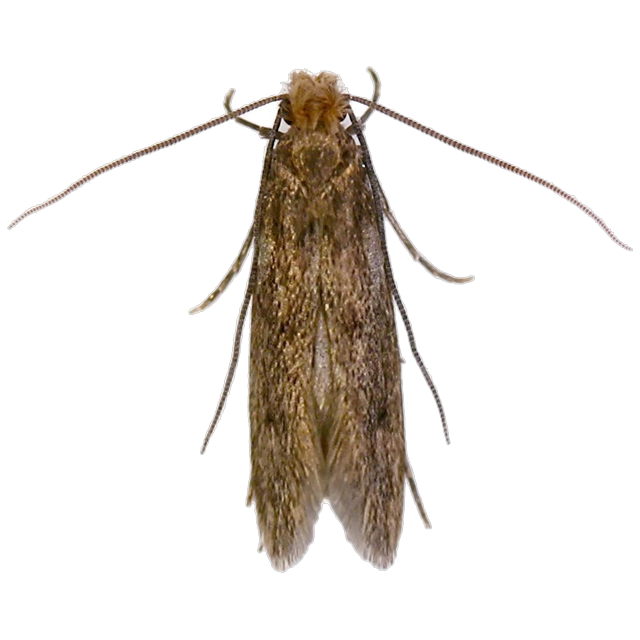 Casemaking clothes moth
Tinea pellionella
A clothes moth whose larvae carry a silken case as they feed on fabrics.
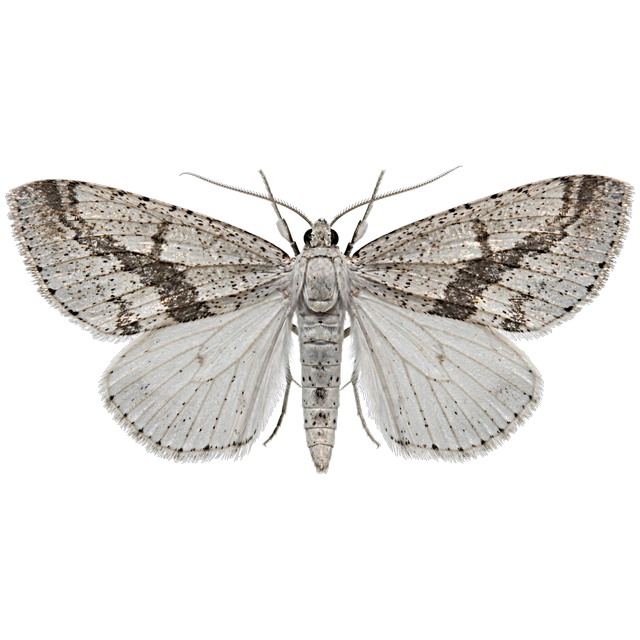 Mediterranean flour moth
Ephestia kuehniella
A pale pantry moth common in flour mills, bakeries, and home kitchens.
El texto en inglés es el texto oficial. La traducción del navegador es solo una ayuda y puede tener errores.
Los Términos, la Política de privacidad y la confirmación de mayoría de edad (18 años o más) son vinculantes en inglés.
英文内容为准。浏览器翻译仅供参考,可能有错误。
条款、隐私政策以及年满 18 岁的确认,均以英文版本为准并具有约束力。
Firefox 不提供翻譯成繁體中文的功能。請改用 Chrome、Edge 或 Safari。
英文內容為準。瀏覽器翻譯僅供參考,可能有錯誤。
條款、隱私政策以及年滿 18 歲的確認,均以英文版本為準並具有約束力。